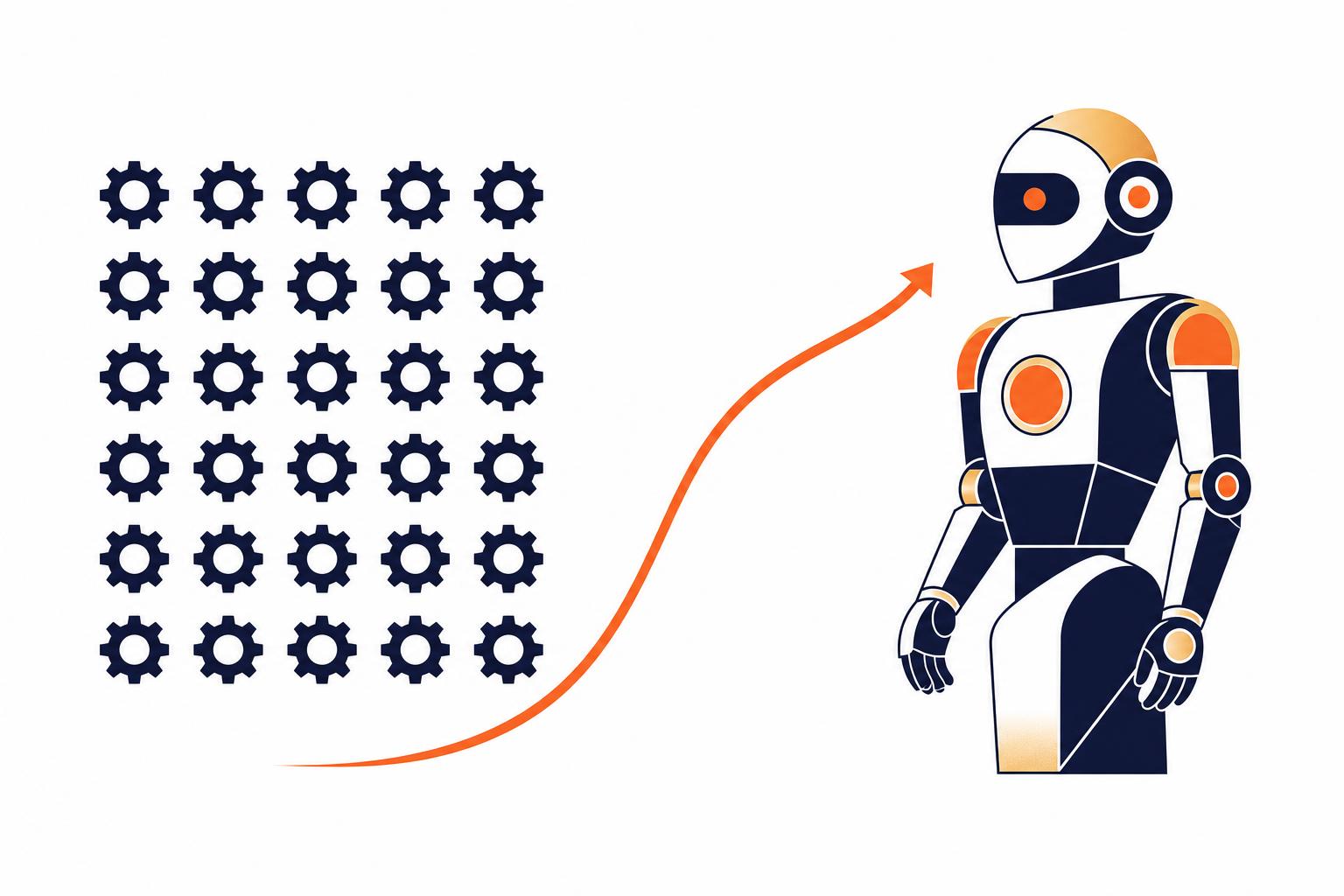
Teams search for Skai alternatives for three recurring reasons: the enterprise weight (contracts, onboarding, specialist headcount) outgrows its return, the platform's paradigm is bid and budget automation rather than full operational execution, and the intelligence is a product capability rather than something that accumulates on your specific accounts. The alternative isn't a lighter bid suite, it's a different architecture: an agentic operating system where AI agents execute the full operational layer across Google, Meta, TikTok, and Microsoft Ads with human approval on every change. That's Adlyse. And for some teams, heavy retail media books, dedicated platform specialists, staying with Skai is still the right call. This page covers both honestly.
Why do teams look for Skai alternatives?
Skai is a capable enterprise platform, cross-channel bid automation, pacing, and analytics with particular strength where retail media sits alongside search and social. Teams don't leave because it stopped working; they leave because of structural fit, and the reasons cluster into three:
The enterprise weight. Skai belongs to the generation of platforms built for enterprise procurement: annual contracts, real onboarding, and enough surface area that it rewards dedicated platform specialists. For a mid-size agency or a lean brand team, that weight can exceed the value, you're staffing for the tool instead of the tool removing staffing pressure.
The paradigm ceiling. The suite's center of gravity is bidding and budget automation, deep, but a subset of the operational layer. Search-term hygiene, creative fatigue response, structural changes, and the judgment-shaped work between platforms still route through your team's hands. When the bottleneck is total execution capacity rather than bid sophistication, more bidding horsepower doesn't move it.
Whose intelligence improves. Enterprise suites improve as products, features ship, models update, but the improvement is shared across every customer equally. Nothing about running your accounts for two years makes the platform meaningfully smarter about your accounts than about a stranger's. In a market where platform-native AI already handles the auction, that missing per-account layer is where alternatives start to look interesting.
What should you look for in a Skai alternative?
Not a cheaper bid suite, a different answer to what the software is for. The evaluation criteria we publish as the Live-Spend Test apply directly, with three carrying extra weight for teams leaving enterprise suites:
Execution scope. Does the platform execute the whole operational layer (hygiene, rotation, targets, structure, cross-platform reallocation) or automate one function deeply? The gap between "bid automation" and "operational execution" is the gap most Skai-alternative searches are really about.
Governance model. Enterprise suites were built for ops teams; the modern requirement is legible accountability, every change proposed with reasoning, approved by a named human, and logged end to end in an audit trail. If anything, this exceeds enterprise-suite governance rather than trading it away.
Per-account learning. Does intelligence accrue to your accounts specifically, every approval, rejection, and outcome making the next decision sharper, or does it stay a product capability? This is the compounding intelligence layer, and it's the criterion legacy architectures structurally can't retrofit.
Adlyse as the alternative
Adlyse is the agentic operating system for performance marketing: AI agents execute optimizations across Google, Meta, TikTok, and Microsoft Ads, every change gated behind human approval and logged with its signal, reasoning, approver, and outcome. Against the three reasons teams leave:
Against the weight: no specialist headcount requirement, the operating model is a portfolio of agents doing the continuous work and your existing team directing and approving it, which is why it fits the $500K–$5M/month agency and the lean multi-platform brand rather than only the enterprise org chart.
Against the paradigm ceiling: agents cover the operational layer end to end, not one function, including the cross-platform budget decisions no single-platform automation and no bid suite treats as its core job. Bidding itself is handled the modern way: orchestrating platform-native Smart Bidding, PMax, and Advantage+ as the substrate rather than fighting Google's auction from outside.
Against shared intelligence: the compounding layer is per-account. Month six on your account is measurably sharper than month one because your approvals trained it, an asset that accumulates for you, not a feature shipped to everyone.
Skai's paradigm vs. agentic execution
| Dimension | Enterprise bid suite (Skai's generation) | Agentic operating system (Adlyse) |
|---|---|---|
| Core job | Bid & budget automation, analytics | Full operational execution across platforms |
| Decision model | Configured automation + specialist operation | Goal-reasoning agents + human approval per change |
| Novel situations | Within configured strategies | Reasons from context; proposes with evidence |
| Intelligence | Improves as a product, shared by all customers | Accrues per account from your approval history |
| Oversight record | Ops-grade logs | Full trail: signal → reasoning → named approver → outcome |
| Team requirement | Platform specialists | Existing team directing and approving |
| Retail media (Amazon, Walmart) | Core strength | Not the focus, see below |
When staying with Skai is the right call
Honestly: if retail media is a major line of your business, Skai's Amazon/Walmart/commerce coverage is a genuine strength that an execution platform focused on Google, Meta, TikTok, and Microsoft doesn't replace. If you're an enterprise with dedicated platform specialists whose workflows are built around the suite, ripping out working infrastructure to chase a paradigm is a bad trade this quarter. And if your bottleneck truly is bidding sophistication on very large search books, not operational capacity, the enterprise suites remain strong at exactly that. Alternatives are for structural mismatches, not fashion.
How to migrate without breaking accounts
Parallel, never cutover. Run the agentic layer alongside your existing setup on two or three representative accounts, approval on every change, for 60–90 days against your own baseline. Keep any deterministic protections (spend caps, hard stops) permanently, circuit breakers are good engineering in any architecture. Expand account by account as approval history earns it, and expect month one to be the least impressive month: per-account learning starts at your account's zero, and the early approval-heavy phase is the tuition.
FAQ
What is the best alternative to Skai in 2026?
For teams whose real constraint is operational execution capacity across platforms, rather than bidding depth on enterprise search books, the structural alternative is an agentic operating system: agents executing the full operational layer with human approval, per-account learning, and a complete audit trail. Adlyse is built as exactly that. Teams with heavy retail media books should weigh Skai's commerce coverage before moving.
Is Adlyse cheaper than Skai?
Pricing depends on scope for both, so compare the honest way: against the loaded cost of the execution hours and specialist headcount each model requires, not sticker versus sticker. An architecture your existing team can direct prices differently than one that rewards dedicated operators.
Can Adlyse do Skai-style bid management?
It handles bidding the way the 2026 stack actually works: setting, adjusting, and maintaining the platform-native bid strategies (Smart Bidding, PMax, Advantage+ targets) as part of the operational layer, with each change human-approved, rather than replicating a pre-platform-AI external bidder.
Does Adlyse cover Amazon or Walmart retail media?
No, execution covers Google, Meta, TikTok, and Microsoft Ads. If retail media is a core line for you, that's a real gap and belongs in your decision, which is exactly why the "when staying is right" section above exists.
How long does switching take?
The parallel-run approach means there's no switching cliff: 60–90 days of the agentic layer proving itself on representative accounts with approval on everything, then expansion at the pace your approval history supports. Your existing setup keeps running until the record says otherwise.
Want to see the operational layer running on your accounts, every change approved by your team? Start with a free audit.
Start a free audit