How to Leverage AI to Increase Conversions in Google Ads
Higher ROAS. 10x less work.
Put Adlyse on your accounts. Daily audits, agentic optimization, and reports your clients actually read.
Request a demoAI can increase conversions in Google Ads by analyzing performance data faster than humans, identifying hidden inefficiencies, and enabling proactive optimization before wasted spend accumulates.
Instead of reacting to performance drops after they happen, AI helps teams make better decisions earlier, which directly improves conversion rates and efficiency.
That's the core answer.
And it matters now more than ever.
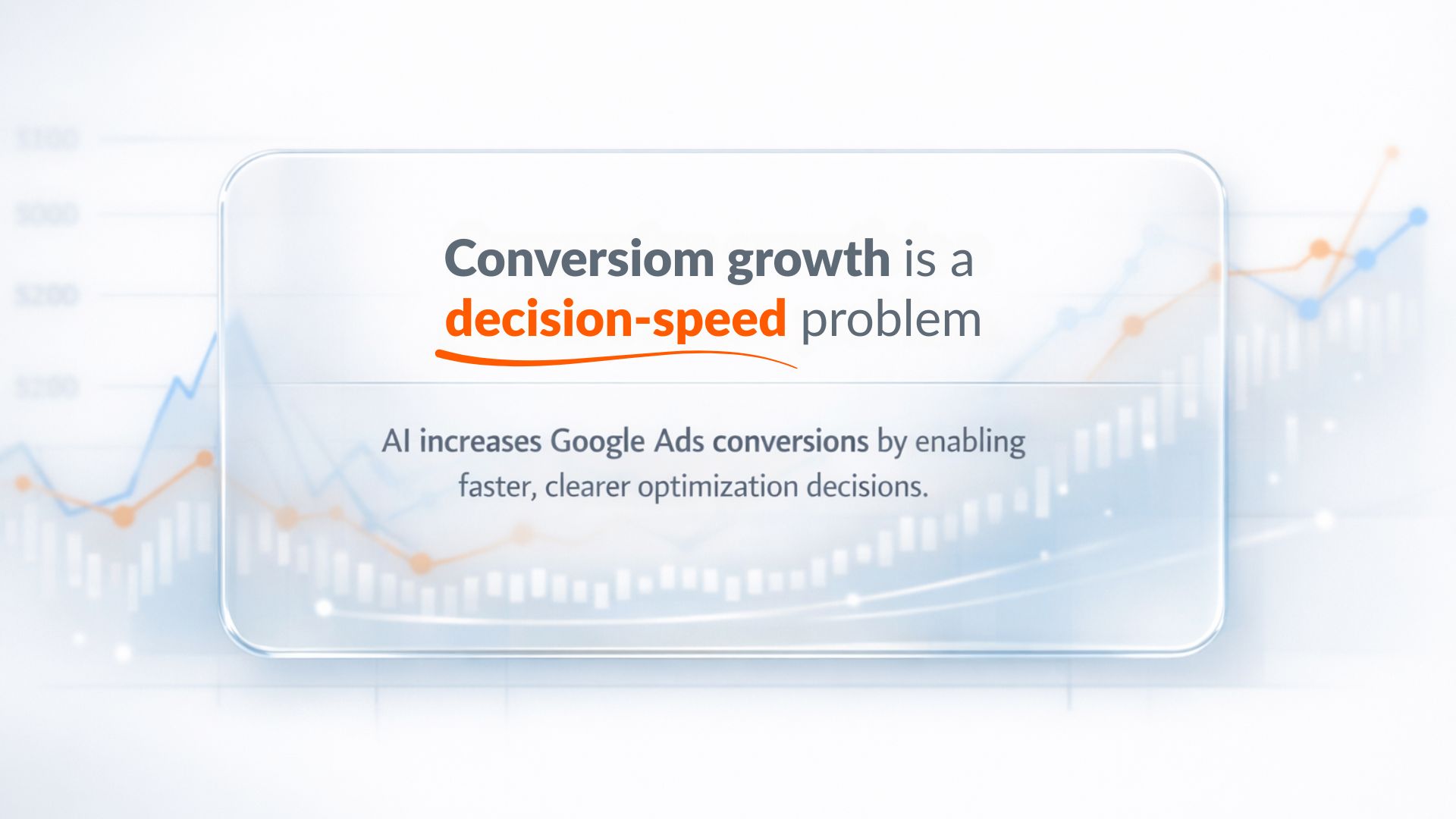
With rising CPCs, increased competition, and more complex Google Ads accounts, manual optimization alone can't keep up. AI fills that gap by turning overwhelming data into clear, actionable insights—continuously.
Why This Matters Right Now
According to Google, advertisers now operate in environments with thousands of signals per auction, including device, intent, timing, and behavior. No human can process that volume in real time.
At the same time:
- McKinsey reports that companies using AI in marketing see 10–20% efficiency gains
- Google Ads accounts have grown larger and more fragmented
- Conversion performance depends more on speed and structure than ever before
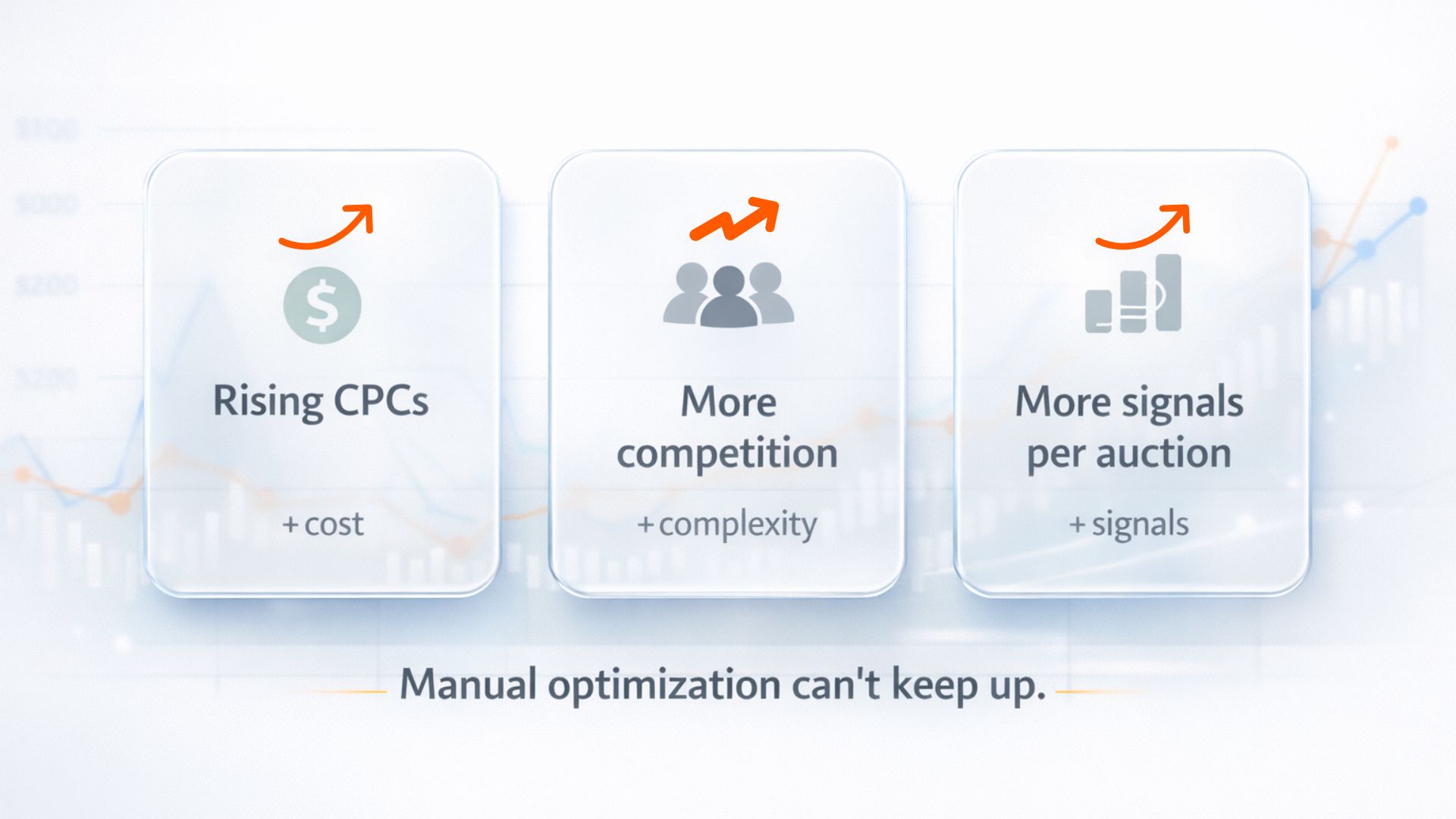
"Conversion growth today is a decision-speed problem, not a creativity problem."
The Real Problem With Google Ads Optimization
Most Google Ads teams aren't doing anything wrong.
They're just constrained by reality.
Here's what typically happens:
- Performance data is spread across campaigns, keywords, and ads
- Insights are discovered during scheduled reviews, not in real time
- Optimizations happen after conversions already decline
This creates three systemic issues:
- Delayed insights – You see problems after budget has already been spent
- Reactive optimization – Changes are made too late to recover lost conversions
- Cognitive overload – Important signals get missed because there's too much data
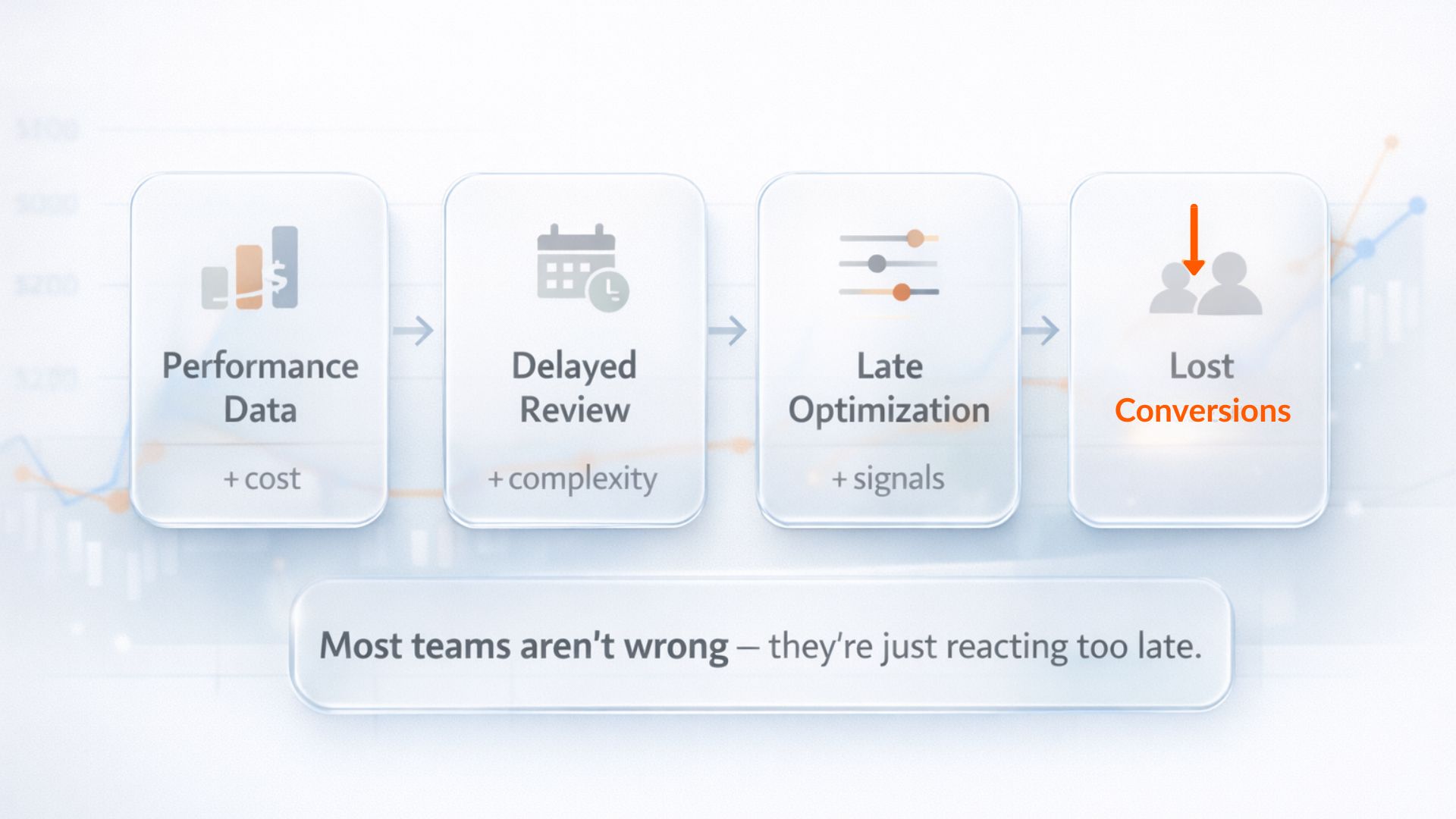
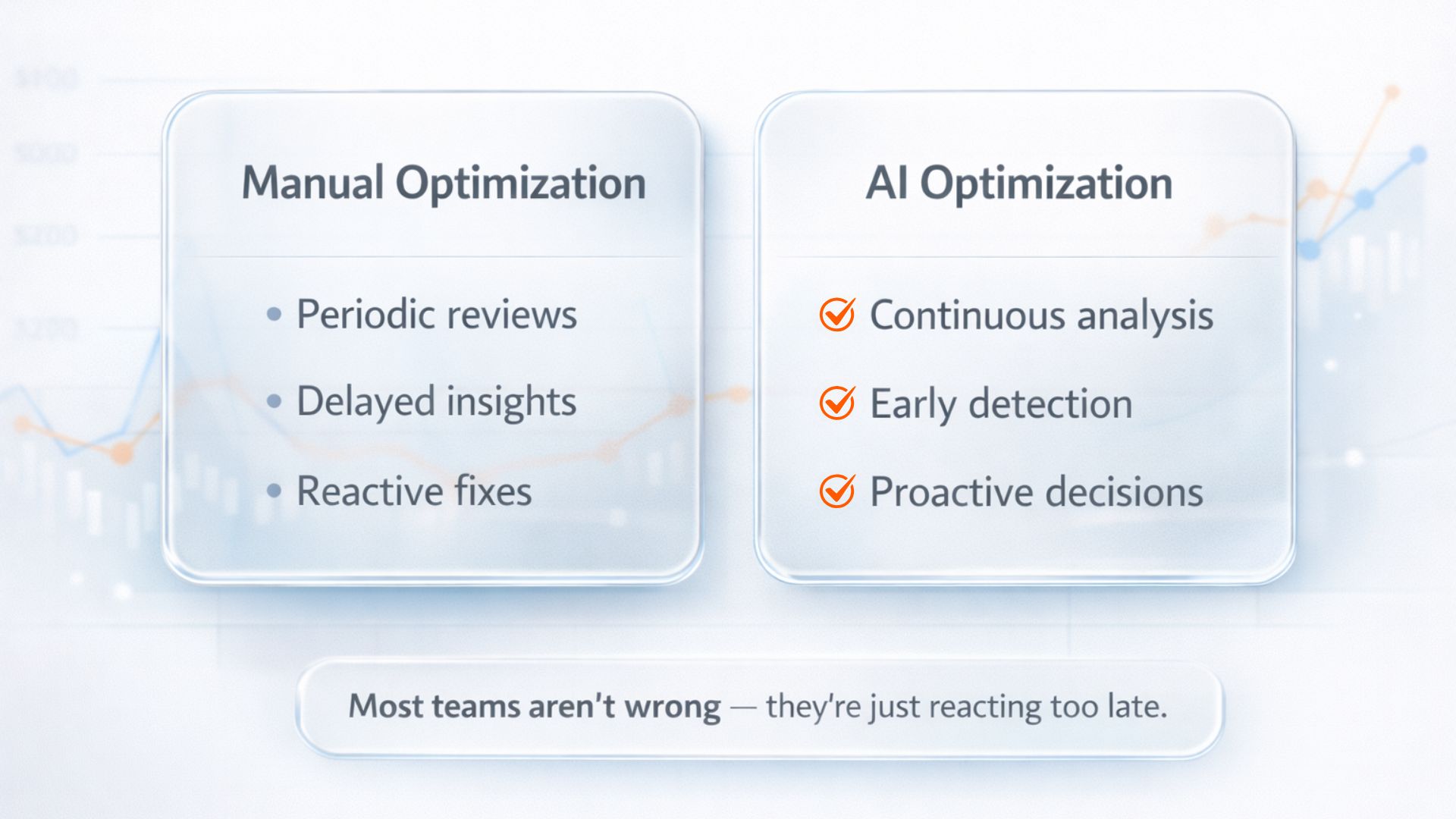
"Most teams aren't wrong — they're just reacting too late."
AI doesn't remove strategy.
It removes the friction that blocks strategy from being executed consistently.
How AI Increases Conversions in Google Ads
Let's break down where AI actually makes a measurable difference.
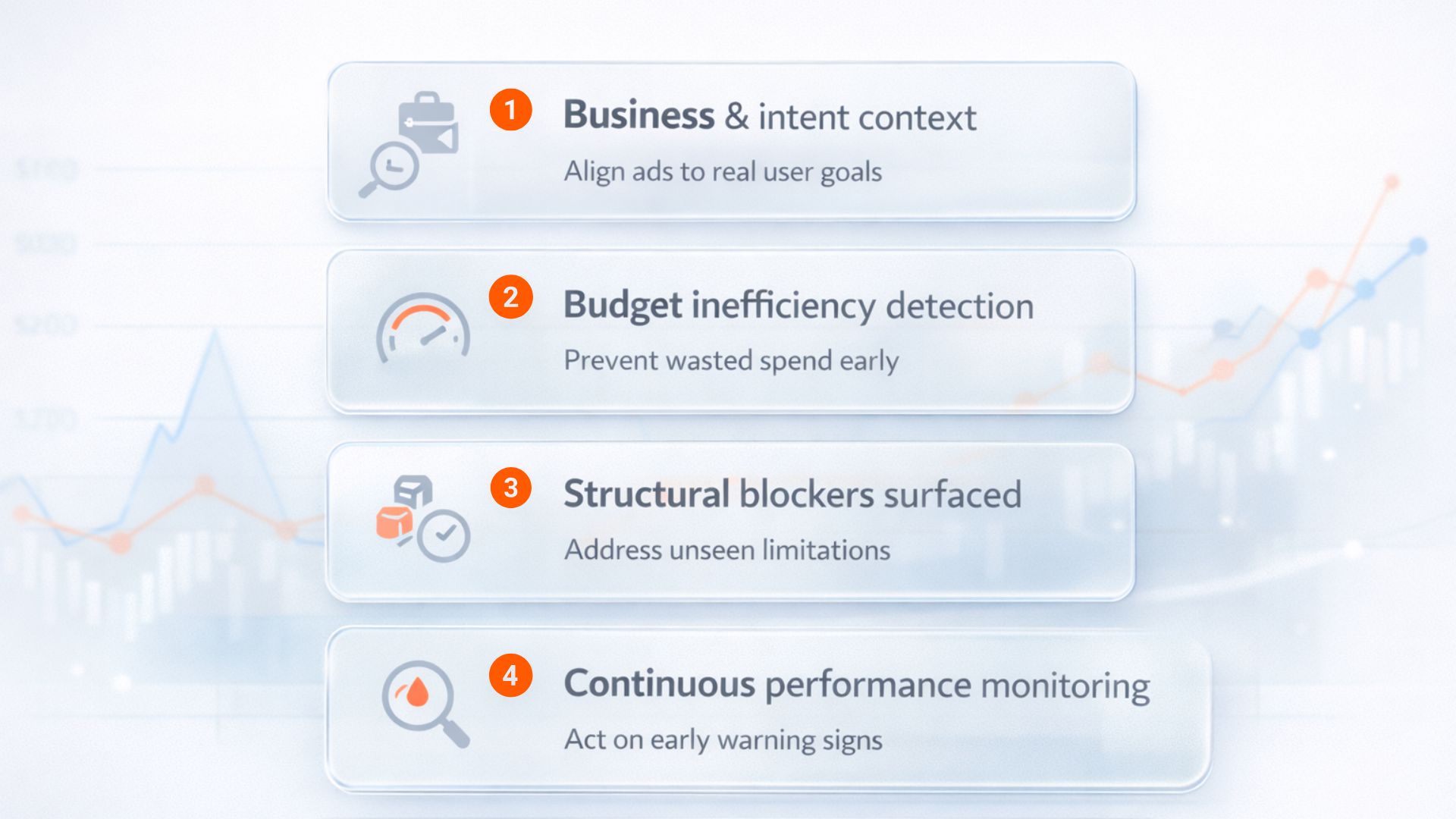
1. AI Adds Business and Conversion Context
Traditional optimization focuses on metrics in isolation:
- CTR
- CPC
- Conversion rate
AI-powered systems analyze performance with context, including:
- Website content and messaging
- Business model and offerings
- Competitive positioning in the market
Why this matters: Context-aware optimizations align ads with real user intent, which is the foundation of higher conversion rates.
2. AI Identifies Budget and Campaign Inefficiencies Faster
Research from Google shows that misallocated budget is one of the biggest causes of lost conversions.
AI continuously evaluates:
- Which campaigns should be scaled
- Where budget is being wasted
- Which segments drive incremental conversions, not just volume
Instead of relying on monthly or weekly reviews, AI spots patterns as they emerge—preventing wasted spend before it compounds.
3. AI Unblocks Structural Conversion Limits
Many accounts underperform not because ads are bad, but because structure limits optimization.
AI can detect:
- Missing ad variations
- Campaign setups that restrict learning
- Conversion paths that lack sufficient signal volume
This matters because Google's optimization systems can't improve what they can't learn from. AI highlights these blockers instantly and explains why conversions are capped.
4. AI Enables Continuous Performance Monitoring
According to internal Google benchmarks, early detection of performance shifts has a direct impact on conversion recovery.
AI monitors:
- Conversion rate changes
- Spend efficiency
- Anomalies and drops in real time
That means teams no longer need to constantly check dashboards—and no longer miss early warning signs that quietly erode conversions.
Why AI-Powered Reporting Changes Outcomes
Traditional reporting answers: "What happened?"
AI-powered reporting answers: "What should we do next?"
Instead of manually pulling reports, teams can ask:
- What's hurting conversions this month?
- Which campaigns should be scaled right now?
- Where is spend not converting efficiently?
Faster answers lead to faster action—and faster action leads to higher conversion volume.
How Adlyse Applies AI to Conversion Growth
Adlyse is built specifically for this problem.
It functions as an AI worker for Google Ads that:
- Automatically researches your business and competitors
- Continuously analyzes account performance
- Surfaces clear, prioritized optimization insights
- Generates on-demand reports in plain language
- Learns from your account over time
Instead of replacing media buyers, Adlyse amplifies their decision-making capacity—allowing teams to scale performance without scaling headcount.
The Data-Backed Difference Between Manual and AI Optimization
Manual Optimization
- • Periodic reviews
- • Delayed insights
- • Reactive fixes
- • Performance tied to available time
AI-Assisted Optimization
- ✓ Continuous analysis
- ✓ Proactive decisions
- ✓ Faster execution
- ✓ Performance tied to opportunity, not workload
"AI doesn't create conversions. It removes the friction that blocks them."
Final Takeaway
AI increases conversions in Google Ads by improving speed, clarity, and consistency in decision-making.
As accounts become larger and more complex, conversion growth depends less on effort—and more on how quickly teams can identify and act on the right signals.
See how Adlyse identifies what's working, instantly.
Try the AI assistant for Google Ads optimization and uncover hidden conversion opportunities.