Meta Pixel Counts More Conversions From Nov 12
Meta Pixel Counts More Conversions From Nov 12
From Nov 12, 2026, Meta Pixel turns on on-device conversion measurement by default. Capture a baseline now so you can read the change before Black Friday.
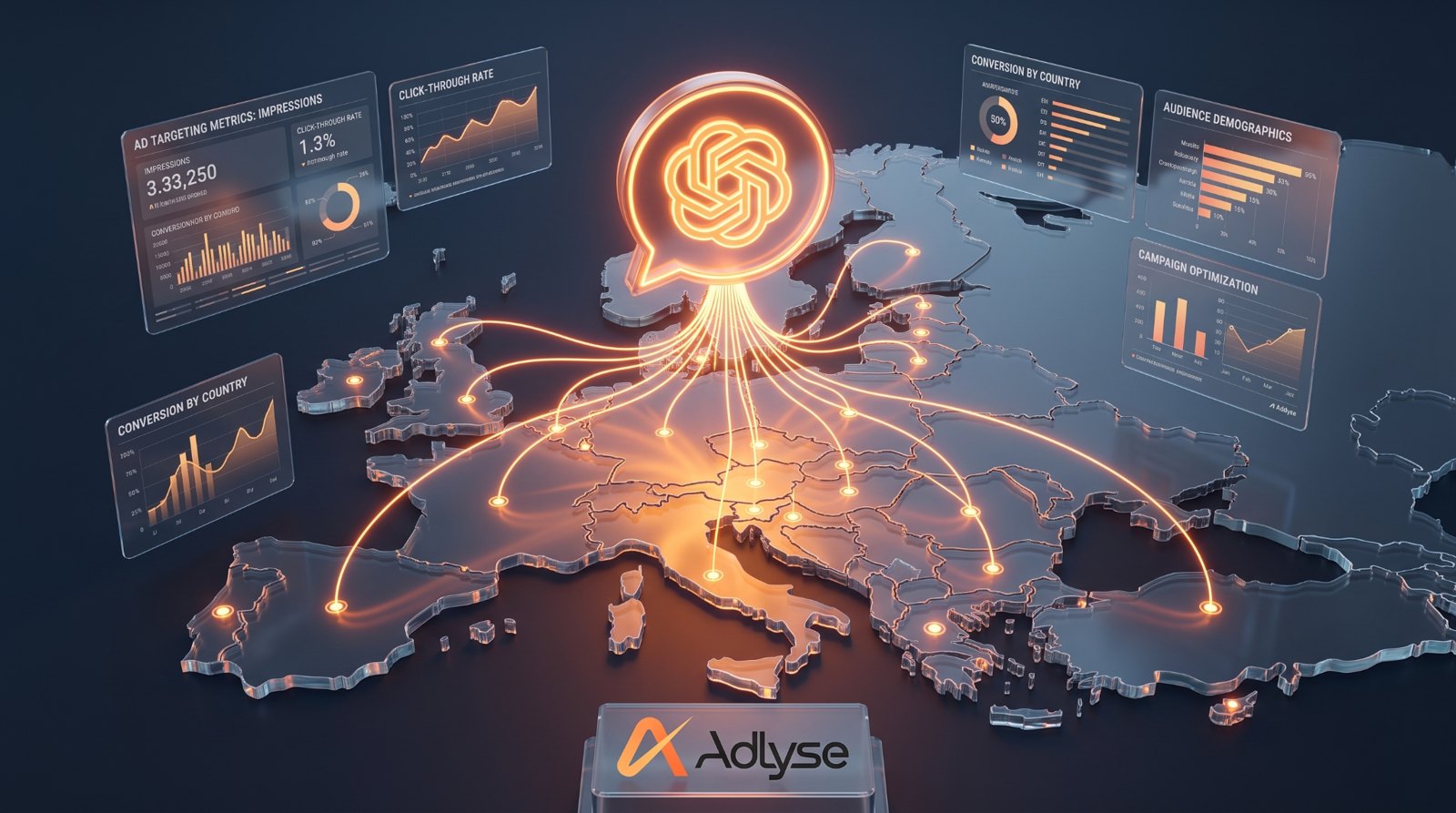
From Nov 12, 2026, Meta Pixel turns on on-device conversion measurement by default. Capture a baseline now so you can read the change before Black Friday.

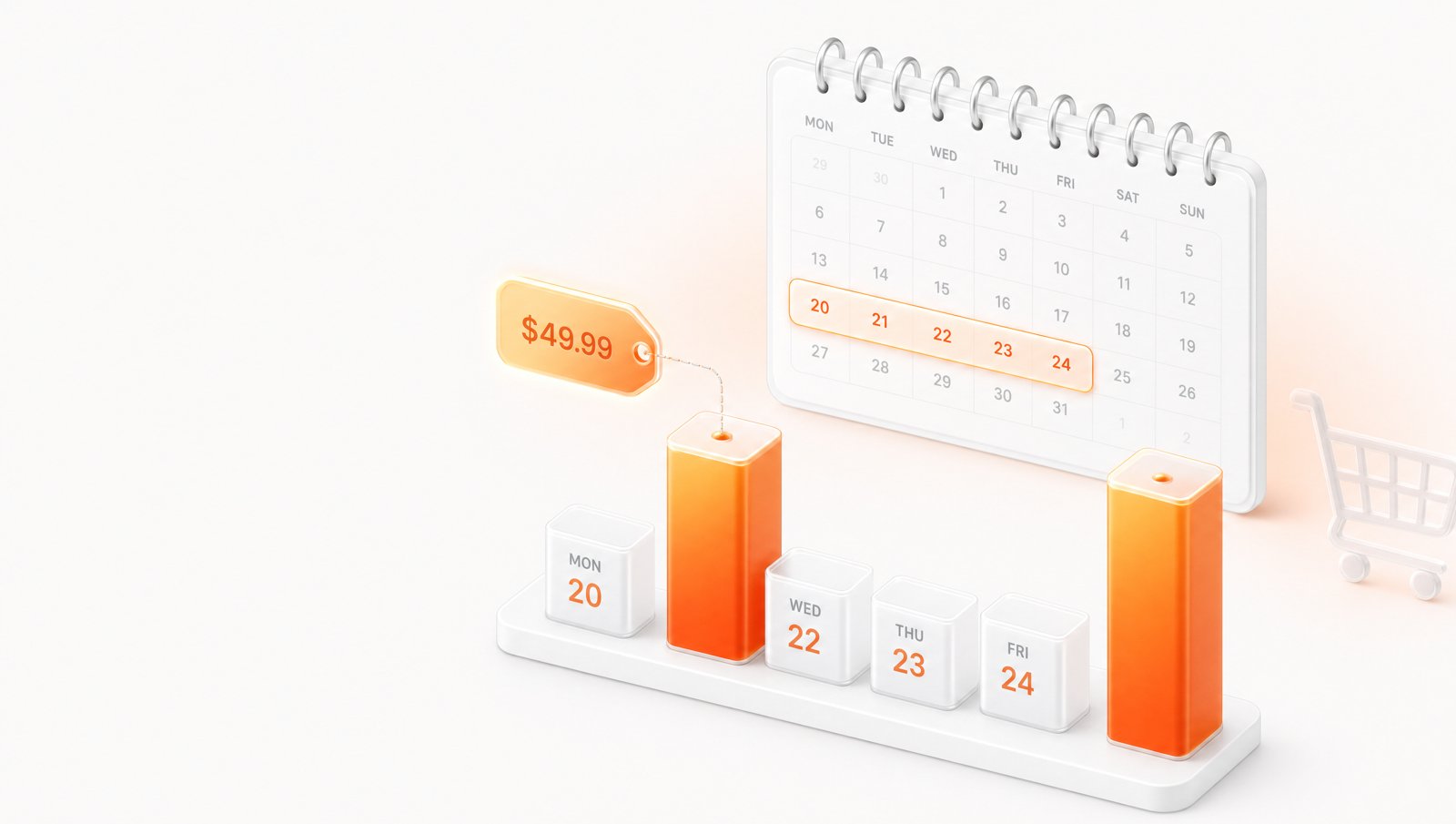
Adobe forecasts $47.5B in US online sales for Cyber Week 2026, Nov 26-30. See the day-by-day numbers and what they mean for your ad budget pacing.

A Black Friday monitoring plan for Google and Meta: what to check each day, which pause rules to write in advance, and how budget overspend really works.

Google Ads now labels AI-made ad creative in more regions. See where disclosure applies, what triggers a label and what to check in your accounts.

Adobe expects AI-referred retail traffic up 130% this holiday season. Set up a GA4 channel group now so you can see it, and learn what GA4 will miss.

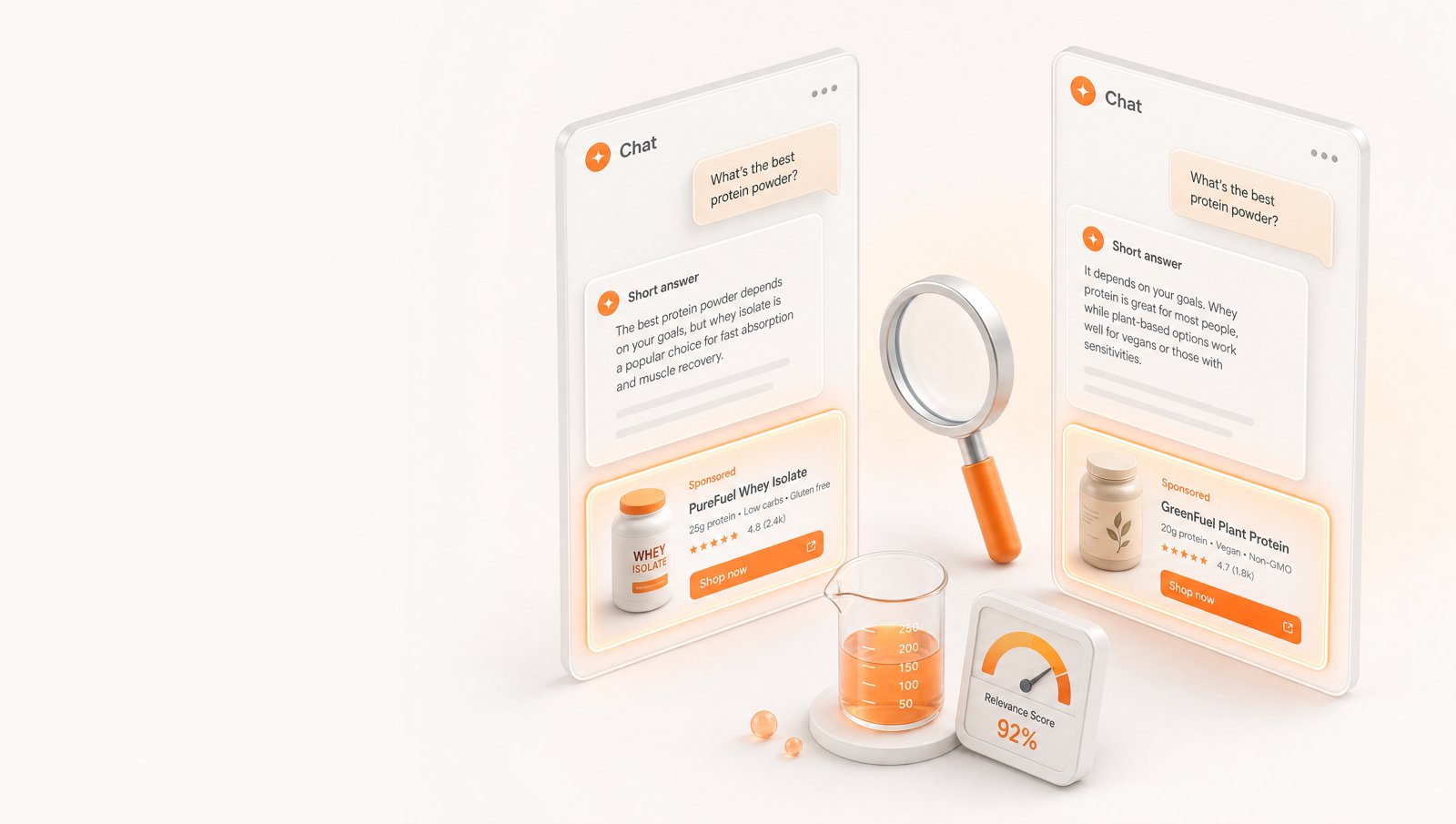
Ads now run inside AI answers on Google and ChatGPT. See what Google said on its Oct 28 call, what Adthena counted and how to test before the holidays.

Meta splits the holiday season into four phases. Here is what each phase means for your ads, mapped to the 2026 calendar from Nov 5 to the new year.

OpenAI added 26 countries to ChatGPT Ads on Oct 21, 2026, bringing the total to 89. See what changed, what's unclear and how to test a new market.

Adobe forecasts December online sales down 3.5% because Cyber Monday moves into November. Here is how to plan December ad budgets and read the results.

Universal Ads is now on Adlyse, so TV sits with Google, Meta, Microsoft, TikTok and OpenAI Ads. See what launched on Oct 27, 2026 and what to ask first.

Instagram is testing 90-minute videos called Features. Meta has not confirmed ads in long-form videos, so here is what advertisers should do now.

Meta's AI ad terms now take effect November 20, not October 30. Here is what was reported, what is unconfirmed, and what to audit before then.

Google turns on Performance Max image extraction by default for new campaigns on December 4, 2026. See who is affected, how to opt out, and how to audit.

A weekly routine to review platform AI ad changes: pull what Google, Meta and OpenAI added, compare to approved creative, sample, decide, log, roll back.

Add TV to a performance marketing mix without guessing. Pre-register the test, hold out geos, set a spend floor, and read the result without overclaiming.

How to target LinkedIn company lists in Microsoft Advertising: setup steps, the 10,000 list vs 1,000 ad group limits, exclusions, and what to check first.


How to run a Performance Max asset experiment: set the hypothesis, split, duration and metric, read the results, and know when not to test during peak.
A Black Friday change freeze locks structure and goals, not budgets. See what to lock in Google Ads and Meta before BFCM, with a dated 2026 calendar.

ChatGPT Ads creative enhancements switch on by default around Oct 30. See what OpenAI can change in your ads and how to opt out in Ads Manager.

Set up Google Ads channel prioritization: High and Low priority, budget caps for Search partners and Display, and what changes in February 2027.

Audit default-on AI features in Google, Meta and ChatGPT Ads with a repeatable checklist: inventory, owner, risk, setting location, decision, review date.

Should you turn off Search partners and Display expansion in Google Ads? Test each network with a data floor, plus Google's new Low priority option.

Google Ads automated promotions pull offers from your site into Search and Performance Max ads. See who is eligible, what to check, and how to opt out.

Google Ads API v26 added 15 Search Lift metrics. Here is what Search Lift measures, which parts are API-only, and how a marketer should read them.

Meta Business Agent talks to customers. The Meta AI business assistant advises on ads, and its agentic actions are in testing. Here is what each one does.

Automate the data pull, CRM de-duplication, and weekly summary. Keep anomaly notes and the client narrative human. Here is the split, with sources.

Set up Meta Business Agent in the WhatsApp Business app or on the Platform: eligibility, testing, and controls, all based on Meta's own documentation.

A prioritized order for performance marketing automation: start with alerts and reporting, add narrow rules next, and leave budgets and creative for last.

WFA research says labour-based agency pay fell from 54% to 19% since 2011. Here is what shifting pay models mean for agencies running ad ops with AI.

Meta's Muse can now connect to your ad accounts, Shopify, Stripe and Canva. Here is what to check, approve and test before you switch it on.

Customer Match now lists IP address and timestamp columns. Learn how to format the upload, who is excluded, and which consent checks to run first.

Comparing Synter alternatives? Five criteria for choosing an AI agent platform for paid media, with Synter and Ryze claims taken from their own sites.

Automate large product catalogs by group, not by SKU: clean the feed, segment with custom labels, set data floors on rules, and keep humans on big moves.

Are AI media buying tools worth it for a small DTC brand? Use a break-even test, a data floor, and a spend band to decide before you pay for anything.

See competitors' display ads with Google's Ads Transparency Center and Meta's Ad Library, plus what these libraries can't show: spend, targeting, results.

OpenAI opened ChatGPT Ads to 31 European markets on August 18, 2026, with self-service access through Ads Manager following on August 31.

Instagram Live Video Ads started rolling out September 29, 2026, extending a format that had previously existed only on Facebook.

On September 21, 2026, Shopify announced a partnership letting Meta's AI shopping agent, Muse, complete purchases through Shop Pay across every Shopify store.

Google's own search liaison, Danny Sullivan, put the industry's GEO panic in blunt terms at a WordCamp US keynote: "Good SEO is good GEO, or AEO, AIO, LLM SEO, or LMNOPO." The core claim, restated by Google and discussed across the SEO industry repeatedly through 2026, is that generative engine optimization isn't a new discipline requiring a new playbook; it's the same fundamentals (unique, genuinely useful content, a good page experience, clarity for people) that have always mattered for search, now also serving AI answer engines.

LinkedIn changed how comments display under posts, moving from a shared, chronological order to a personalized ranking based on each individual viewer's professional interests, connections, and engagement activity, a shift reported August 9, 2026.

Google began automatically upgrading Search campaigns to AI Max on September 1, 2026, and the window runs through the end of the month.

Google announced a set of measurement upgrades on September 10, 2026: a Data Strength Uplift metric that quantifies how many additional conversions your first-party data setup is recovering, a Universal Data Manager API built on IAB Tech Lab's Event and Conversions API standard, and upgrades to Meridian, Google's open-source marketing mix model, including agentic capabilities and global availability for geo-based causal experiments.

OpenAI shipped ten updates to ChatGPT Ads on September 17, 2026, and three of them change how you'd actually plan a campaign: conversion-optimized campaigns that bill on impressions rather than clicks and can credit conversions from views as well as clicks; the ability to target and report on Android app, Android web, desktop web, iOS app, and iOS web separately instead of as one undifferentiated surface; and ad copy that adapts headlines and descriptions to conversation context and translates them into the user's language automatically.


OpenAI began US testing of Sponsored Agents on September 17, 2026: a ChatGPT Ads feature that lets a brand's AI agent initiate a conversation with a user inside ChatGPT, rather than simply serving a static ad the user might click.

Meta launched Meta One as part of its September 15, 2026 update: a business subscription with four pricing tiers, from $14.99 to $499 a month, that gates tools including Competitive Insights, Custom Audience Insights, and extended reporting behind a paywall.

Microsoft Advertising rolled its own AI Max tool to general availability in September 2026, enabling it by default for all new Search campaigns.

California's SB 1050 reached the governor's desk on September 9, 2026, and would require disclosure when AI-generated performers appear in advertisements.

The FTC finalized a settlement against CMG Media Corporation in September 2026, totaling $930,000 across three related entities, over an AI-powered advertising service that the agency found had targeted consumers using conversations captured from smart devices, with disputed claims about what consent had actually been obtained for that data use.

IAB Tech Lab introduced AAMP 3.0 on September 22, 2026, a standard for the RFP-to-buy process in agentic advertising, explicitly positioned as filling a gap that AdCP, the protocol backing OpenAI and others' agent-to-agent ad buying, doesn't fully address.

A wave of coverage in mid-September 2026 described a genuinely new pattern in agentic commerce: AI agents shopping not just on behalf of a human end customer, but for other AI agents, one system sourcing inputs, comparing options, and transacting with another system, with no human directly in that specific loop.

The company's operating system coordinates AI agents across advertising platforms, giving marketing teams control over strategy, permissions, and execution.

A practical guide to what makes advertising truly agentic: hypotheses, approval gates, graded verdicts, guardrails, and how to evaluate any vendor's AI claims.

The board doesn't ask if AI touched the account, it asks if you can prove what it did: hypothesis, approval, execution record, verdict.

A change log tells you what moved. An audit trail tells you why it moved, who is answerable, and whether it worked. The seven fields that separate the two.

A falsifiable prediction, a fixed measurement window, an isolated change, and a graded verdict: improved, hurt, or neutral. That is the method.

An execution hour costs the fully loaded hourly cost of the person doing it, multiplied by how many of those hours exist across your book. Most agencies never measured the second number.

In-house ad automation is not one project, it is five: integrations, execution, reconciliation, guardrails, and grading. Here is the honest cost of each.

Autonomous does not have to mean unsupervised. Five mechanisms make AI autonomy in ad spend practical rather than reckless, and one missing piece turns the layer into theater.

If a system executes the bid changes, budget shifts, and pausing your team used to do by hand, what stays billable? The new deliverable, and which pricing model fits.

Performance Max and Advantage+ are not competitors to Adlyse, they are a different layer of the same stack. What each layer does, and when to add one.

The real cost of manual reporting reconciliation is not the hours any cycle takes, it is that the same hours get spent again next cycle because the platforms never agree.

Google Ads, Meta, and your CRM will never agree, and that is not a bug. Why the gap exists, which number to trust, and how a reconciliation layer works.

The unglamorous math on whether Adlyse pays for itself on your account, including the parts that argue against buying.

The mechanics of scan, propose, approve, execute, and grade are identical across every platform. What is different on ChatGPT Ads is the hypothesis library.

Connect Claude Code, Claude Desktop, Cursor, or any MCP client to Adlyse in one command. Read your ad performance and act on it from the tool you already use, with scoped grants, dry-run previews, and full audit logging.

CPC, CTR, and conversion benchmarks across Google, Microsoft, Meta, TikTok, LinkedIn, and OpenAI Ads — channel by channel, with formats, ad examples, and cited sources.

Ads inside ChatGPT are the first genuinely new performance channel in years. What OpenAI actually ships, what we see running them for customers, why the clicks don't convert, and how to decide if your brand should be there.

Model selection is a per-step routing decision, not a company-wide religion: the five jobs inside an ad workflow, the four criteria that decide each one, and a routing policy you can copy.

The reasoning is the easy part. Here is the context, tooling, approval, and audit scaffolding that turns a capable model into an operator you can put in front of a client.

A living knowledge base that gives every AI agent inside Adlyse a deep, continuously refreshed understanding of your company, customers, goals, and market.

You can now manage five ad platforms — Microsoft, Google, Meta, TikTok, and OpenAI Ads — from one place in Adlyse. Here's what OpenAI Ads is, why it's a genuinely new kind of advertising, and what it costs while it's still early.

How agencies should present AI agents to clients: the framing scripts, the three client questions with honest answers, the QBR slide, and the objection-handling table.

Adlyse's positioning line is an engineering decision: why approval on every change makes agents safer, more accountable, and smarter per account, and what we refuse to build.

The stack audit framework: keep the substrate and one truth layer, kill un-actioned advice tools, consolidate the operational middle, with a worked 8-tool audit example.

Yes, MCP connectors let AI assistants read and change ad accounts from a chat window. Here's what a session really looks like, the five structural gaps, and where the line is.

Q4 punishes teams that improvise. Here's the pacing plan, the guardrails to set before auction prices climb, and the honest case for when to override the algorithm — and when to leave it alone.

Why platform-reported ROAS can't add up, the three classic lies decoded in one table, the hierarchy of truth, and a worked example of reallocating budget with honest numbers.

Consent, data residency, automated decision-making, and who signs off when a machine changes the bid. The compliance conversation nobody in this category wants to have, laid out honestly.

Protocols are being written for agents to buy media from agents. Most of it is early and some of it is vapor — here's what's real, what it would change, and what to ignore until it ships.

The 90-day autonomy rollout, week by week: what to let agents touch first, which guardrails to write before day one, and the honest signals that tell you to slow down.

Competitor ad libraries in one place, impression-share alerts that name the culprit, suggestions priced to the dollar, and creative experiments that run themselves. Everything that landed in July, with a deeper read on each.

A research tool can show you a competitor's ads. It can't tell you what to do about them, because it has never seen your account. So we gave the analysis to the one thing that can see both sides.

Every ad platform is built to optimize on a fast, frequent signal. B2B has neither. That mismatch — not targeting, not creative — is why most B2B paid media underperforms, and it's the first thing agents should fix.

Watch every competitor ad, ask your agent about their angle in plain English, and get alerted the moment one starts outranking you, with the fix already prepared. Here's what just shipped.

Competitor research shouldn't mean a browser tab open to an ad library and a screenshot folder nobody reopens. Meet Brand Watch: every Meta and Google ad a competitor is running, in one place, refreshed weekly.

A competitor running 400 ads and one running 30 look identical through a keyhole. Brand Watch now walks a competitor's full ad library to completion — and retires the ads they've actually stopped.

Everyone agrees you should be testing creative constantly. Almost nobody does it well, because doing it right is relentless. So we built an engine that does the relentless part — with a budget cap and a kill switch.

The top AI advertising platforms of 2026 ranked by six open criteria, execution, approval, audit, compounding, substrate, proof, plus honest thresholds for when you need nothing yet.

Losing impression share tells you something is wrong and nothing about why. Adlyse now diagnoses whether it's rank- or budget-driven, names the competitor who ramped, and hands you a bid change ready to apply.

Why teams look for Skai alternatives in 2026, enterprise weight, the bid-automation ceiling, shared intelligence, what to look for instead, and when staying with Skai is the right call.

Three suggestions are worth a few dollars. One is worth twelve thousand. A list sorted by internal logic won't tell you which. Now the first thing you see is the money.

Every platform now says the same thing: go broad, we'll find them. They're mostly right — and that makes the audience decisions you still own more consequential, not less.

What automated advertising workflows are in 2026, the three automation architectures compared, the anatomy of an agentic workflow, and the five workflows to automate first.

The performance team's week in an agent-run account: daily approval-queue triage, the weekly exceptions-and-drift review, and the protected strategy block, hour by hour, honestly.

The best tool is the one you're already in. Adlyse now lives in Slack's assistant pane — talk with no @mention every turn, and apply suggestions with one button that runs the same accept→execute path as the dashboard.

Performance Max took the levers away and asked you to trust it. Here's what you actually still control, what the black box really hides, and how agents work the surface area that's left.

Attribution tells you which touchpoint to credit. MMM tells you what correlates at the macro level. Only incrementality tells you what would have happened if you hadn't spent the money — which is the question you meant to ask.

When AI agents take over execution, hourly retainers stop making sense. Three repricing models, the three hard client conversations, and how to lead the change instead of discounting through it.

That performance chart nosediving on the last day? Your account is probably fine — your chart was lying. Date presets now end on yesterday, so every day on the chart is a complete day.

The five real risks of giving AI agents access to ad spend, runaway budgets, confidently wrong reasoning, prompt injection, goal drift, orphaned access, and the guardrail that catches each.

ROAS is a great metric right up until it's the only one you have. Creative Analytics now switches between ROAS, CPA, CTR, CPM, CPC, and conversions, flags fatiguing winners, and puts wasted spend front and center.

An agentic workforce is a performance team where AI agents hold the operational jobs and humans hold objectives, approvals, and accountability. Here's the org chart, the new Tuesday, and the three scenarios every team hits.

What Meta Business Agent actually does, what it can't do, and the Two-Agent Map every performance team needs, Meta's conversation agent vs. its campaign agent, explained.

When agents absorb the execution work, the constraint doesn't disappear — it moves. It moves to creative, and most teams are structurally unprepared for where it lands.

The six-gate checklist Heads of Performance use to evaluate agentic AI marketing tools before they touch live spend: execution, approval, audit, compounding, substrate, and proof.

The best AI advertising tools for DTC and e-commerce brands in 2026, measurement, creative, rules, and agentic execution, with honest spend thresholds for when each is worth buying.

DCO promises the machine assembles your best ad. What it actually does is combinatorially test components you chose. Here's what that means when agents run the account, and where the real leverage sits.

The best AI ad management tools for agencies in 2026, ranked by the six-gate Live-Spend Test: execution, approval, audit, compounding, substrate, and proof.

Most ad strategies live in a Google Doc that was accurate for about a week. We built one grounded in your real account performance — editable, and read by every agent as the source of truth.

The 2026 guide to performance marketing automation software, organized by the only split that matters: tools that execute changes in your ad accounts versus tools that report and recommend.

Most onboarding ends with an empty dashboard and a cheerful 'you're all set!' You're not. We'd rather show you the value before you've clicked anything — with a live audit that streams at signup.

Paid media scales in two dimensions, spend and operational surface, and it's the surface that forces hiring. How agent execution changes the arithmetic.

Accelerating the path to AI-powered advertising for every performance marketing team. The acquisition adds a persistent context layer and compounding intelligence to Adlyse's operating system.

Cross-platform advertising is where the remaining alpha lives in 2026. The three hard problems, measurement, allocation, capacity, and their honest answers.

Microsoft Ads isn't a new tab in Adlyse. It's a new platform your agents run, alongside Google, Meta, and TikTok, under one approval.

How AI agents change multi-client campaign management for agencies: one intelligence layer per client, approval workflows that double as client accountability, and account coverage that scales without headcount.

Microsoft Ads is the most commonly ignored incremental channel, skipped for operational capacity, not opportunity. What agents change about that math.

Self-serve plans, one-command MCP, a Creative Library across every account, sharper optimization suggestions, and live AI insights in your reports. Here's what just shipped.

TikTok's Smart+ brought goal-based AI to the platform. What agents run: rotation cadence, testing mechanics, signal upkeep, and TikTok's budget share, under approval.

Alternatives to Madgicx, Revealbot, and Optmyzr in 2026, an honest look at when rule-based ad automation is still right, when it hits its ceiling, and what goal-reasoning agents change.

Meta runs delivery through Advantage+. This guide covers what AI agents add: creative rotation, signal upkeep, and the cross-platform budget judgment, under human approval.

Google Ads is already AI-run inside the platform. This guide covers what agents add: the operational layer around PMax and Smart Bidding, executed with human approval.

What autonomous paid media execution means in 2026, why supervised autonomy beats unsupervised, the input-process-output anatomy, and the 90-day autonomy rollout.

An AI advertising platform defined, and the four very different products hiding under the label: execution platforms, creative generators, measurement tools, and rule-based automators.

AI campaign management in 2026: the three layers (platform-native AI, the agentic execution layer, and humans), what each manages, and what still requires your judgment.

Agentic advertising defined: AI agents that propose and execute changes in live ad accounts under human approval, how it differs from generative AI, rules, and platform automation.

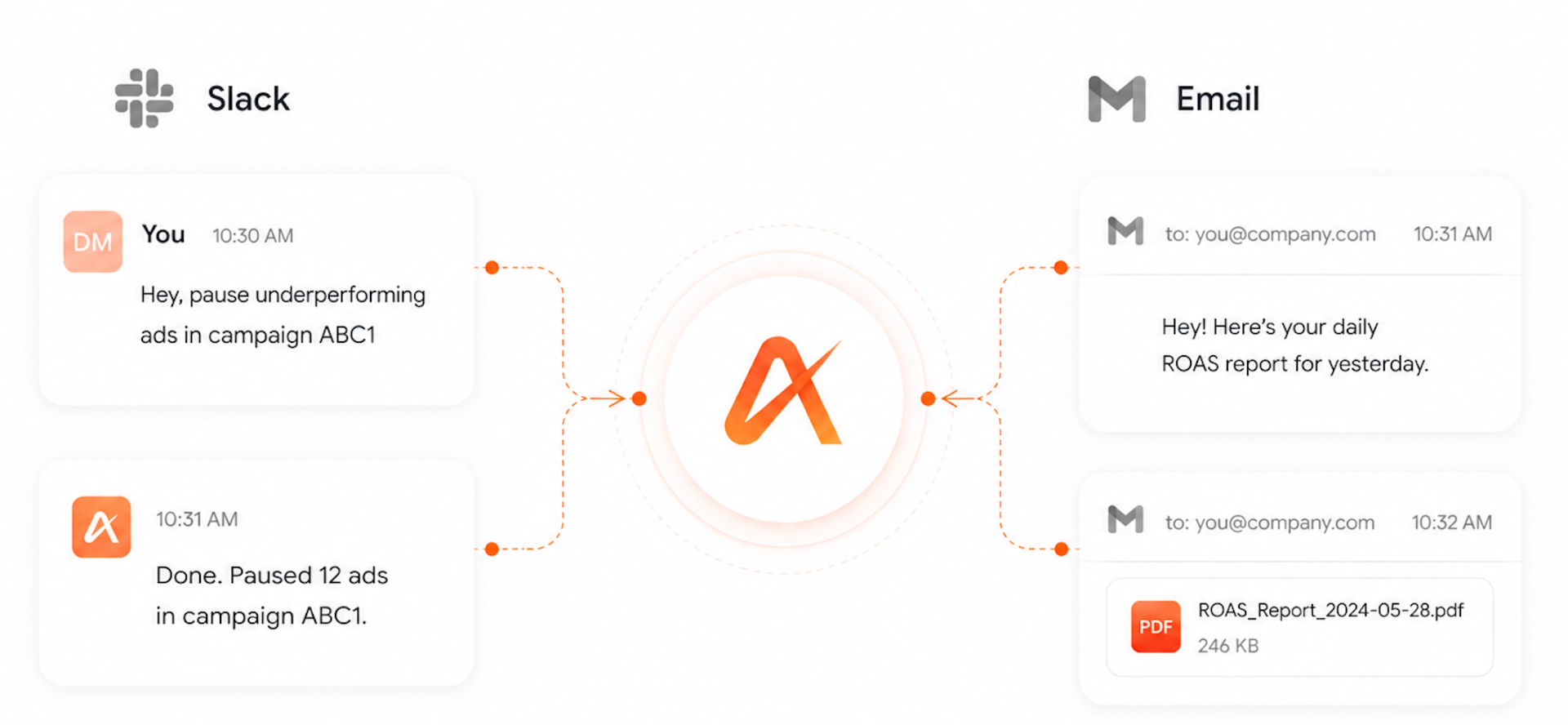
Adlyse works where your team works. Slack, email, the app. It speaks plain language and does the work alongside you, not in a separate console.

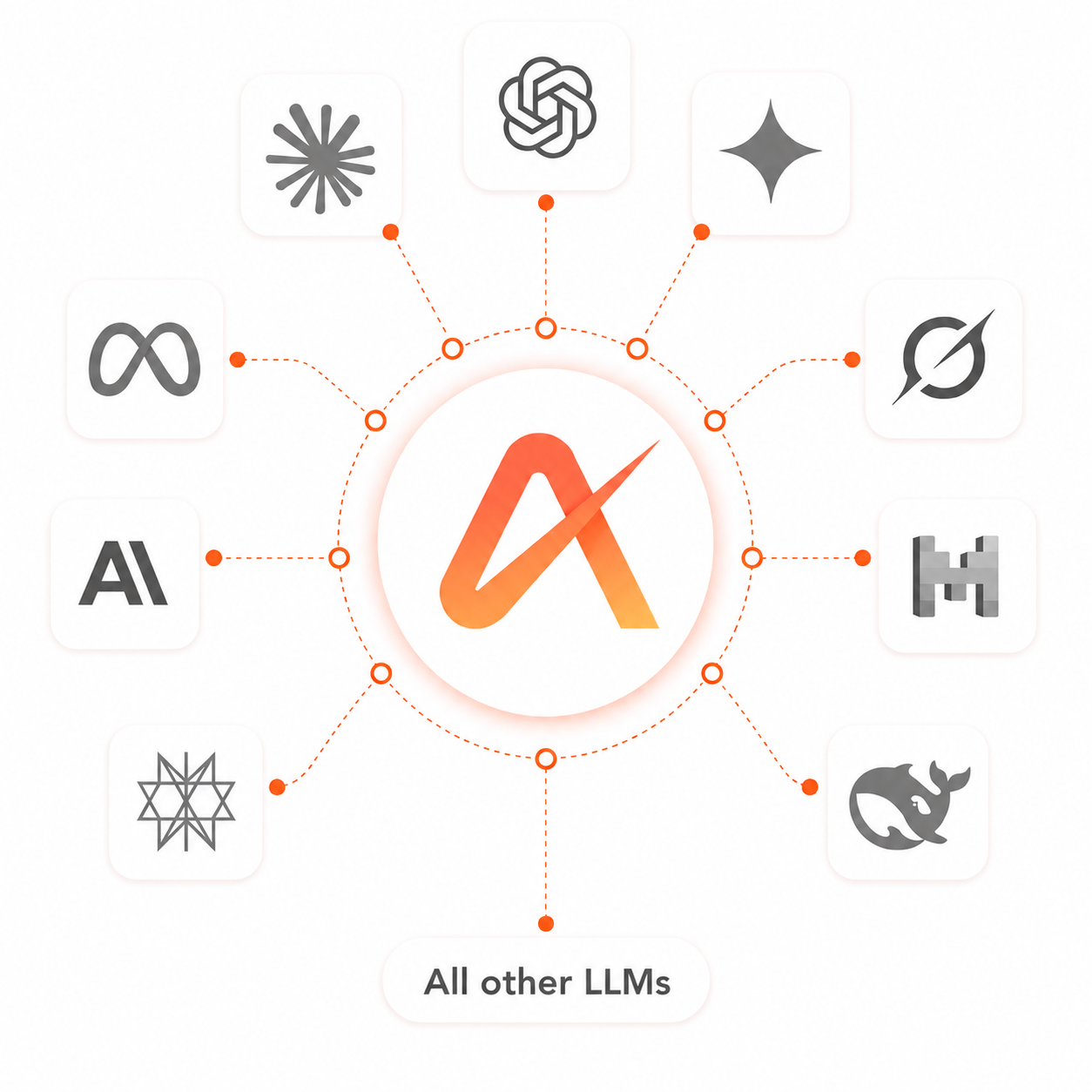
Adlyse is not locked to a single LLM. When a better one ships, you switch in a click. Context, workflows, and history stay intact.

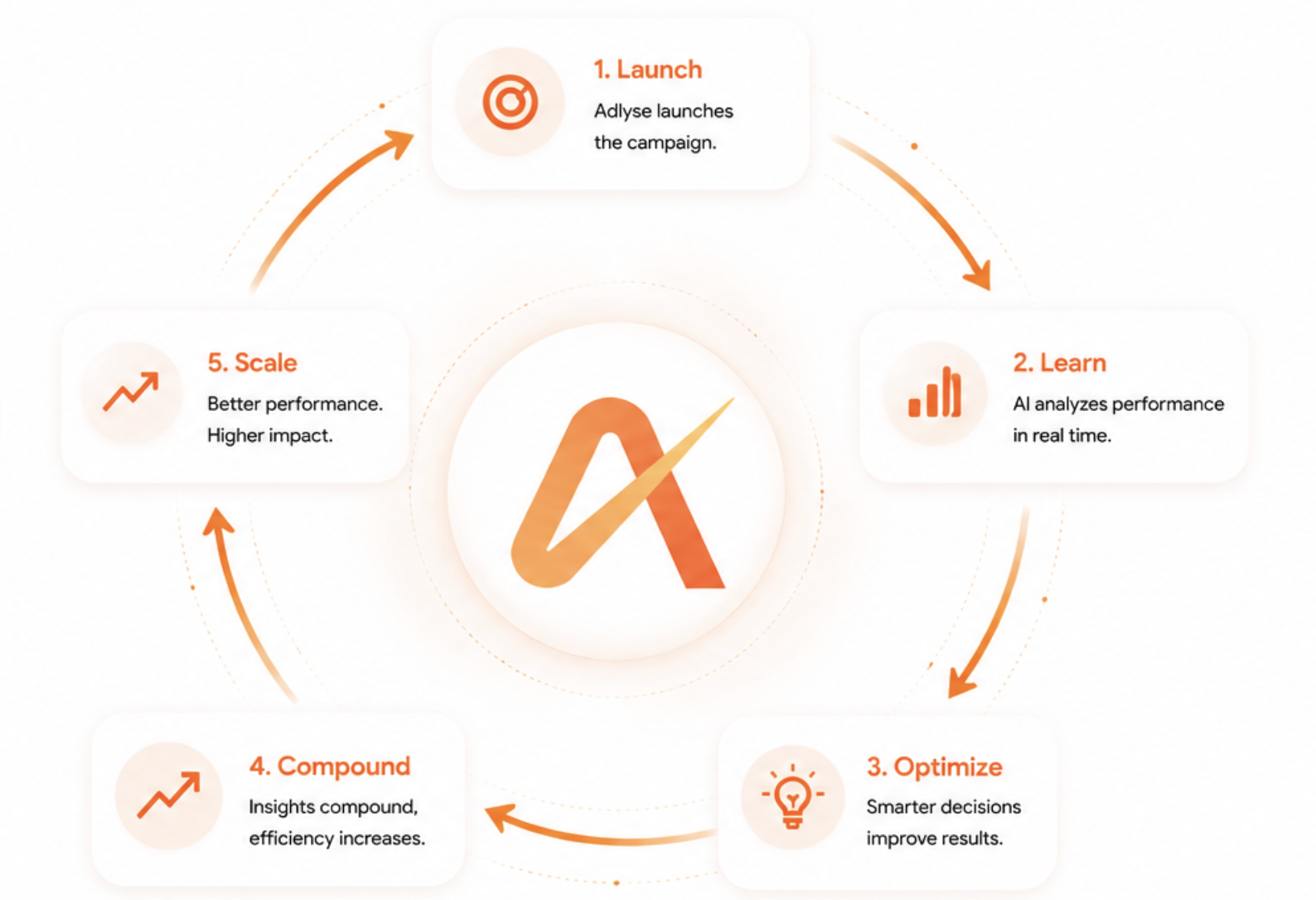
Every campaign, every signal, every decision feeds the same engine. Adlyse turns each cycle into permanent leverage for the next one.

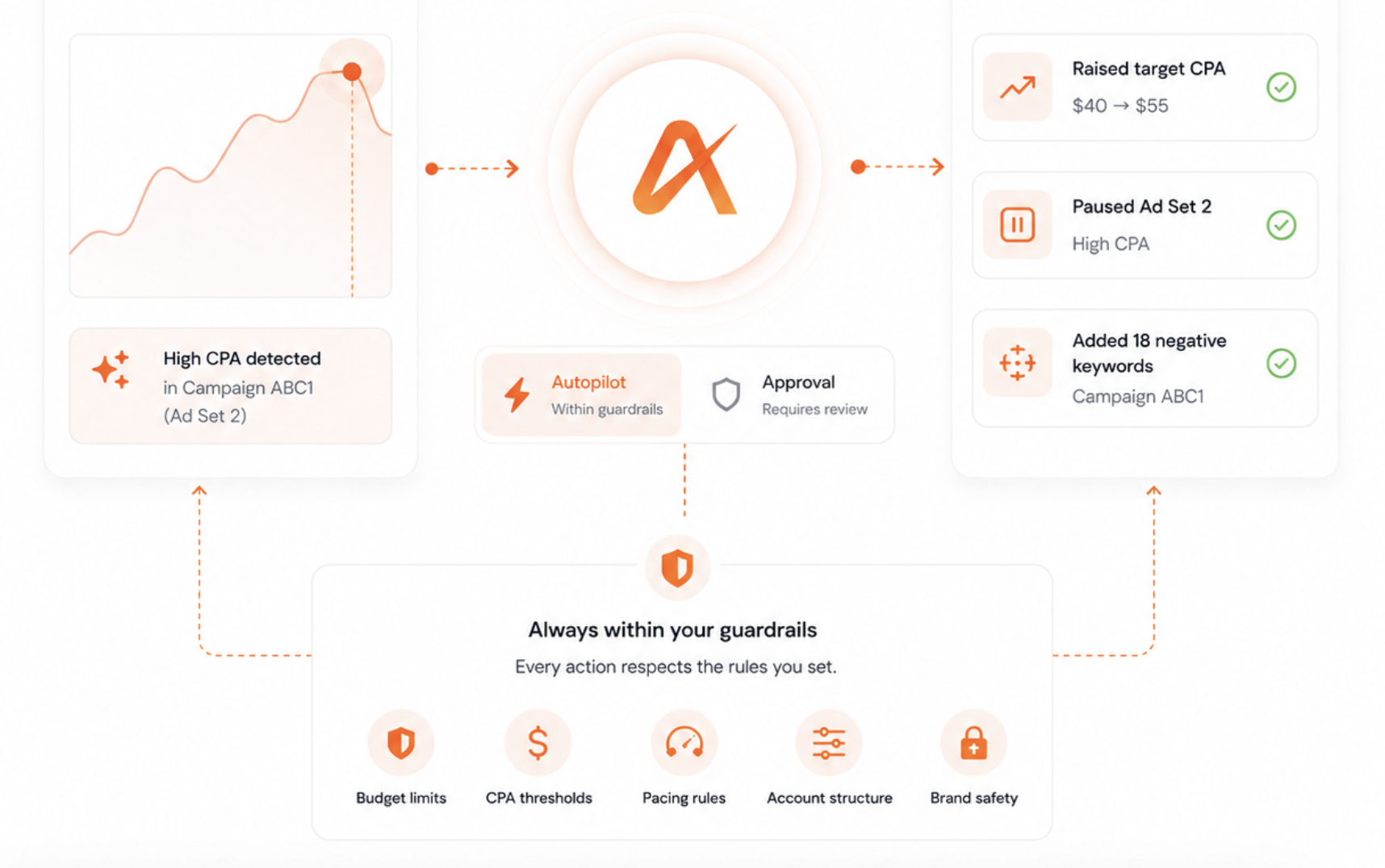
You don't have to ask the right question. Adlyse finds what's working, what's not, why, and what to do next, then surfaces it before you would have noticed.

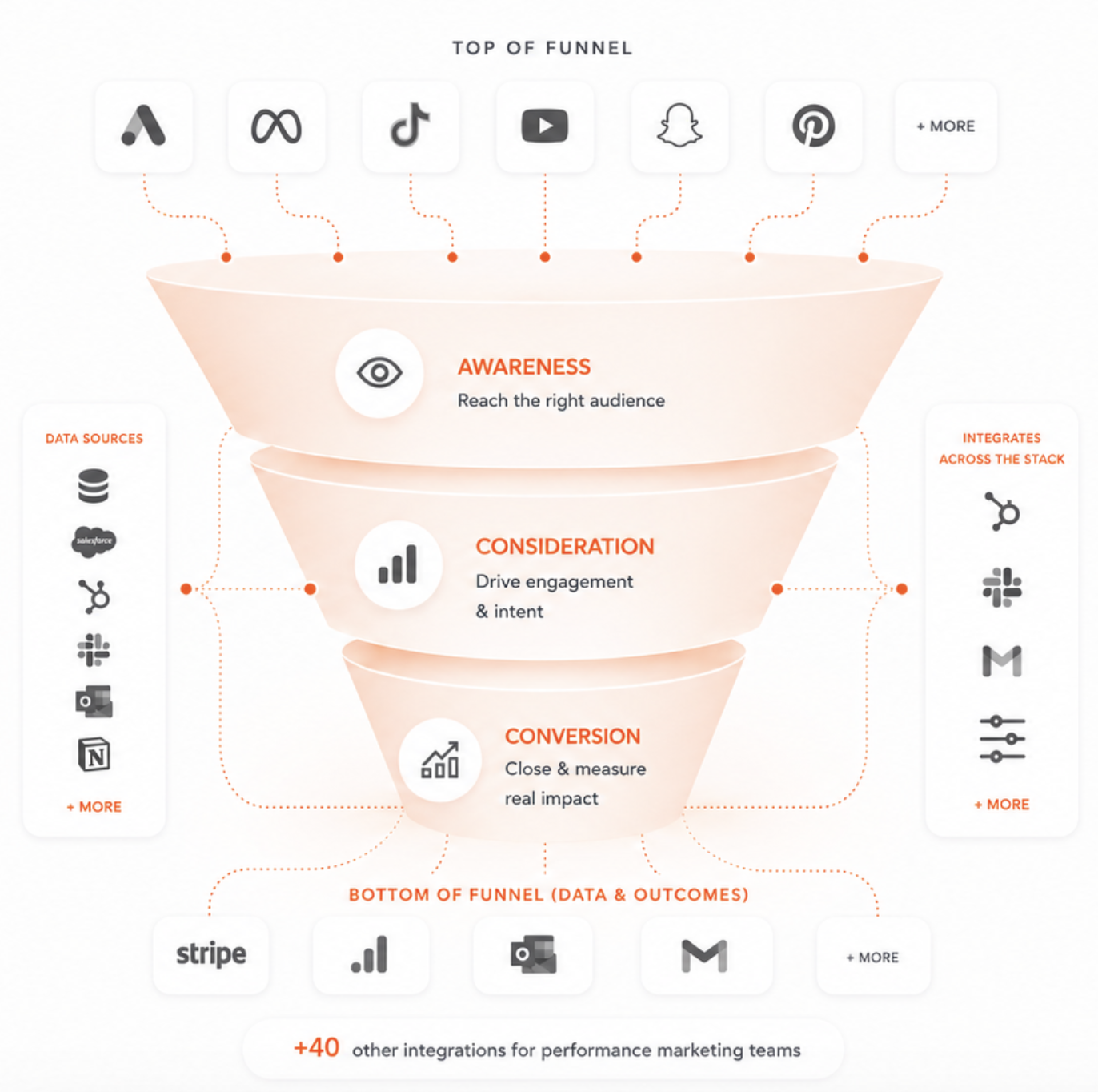
Adlyse connects 3,000+ tools across ad platforms, analytics, and data sources, then decides across them. One picture, one set of actions, no more dashboard hopping.

A manifesto on why the next decade of advertising will not be run by dashboards or disconnected tools, but by an operating system of agents that execute the work.

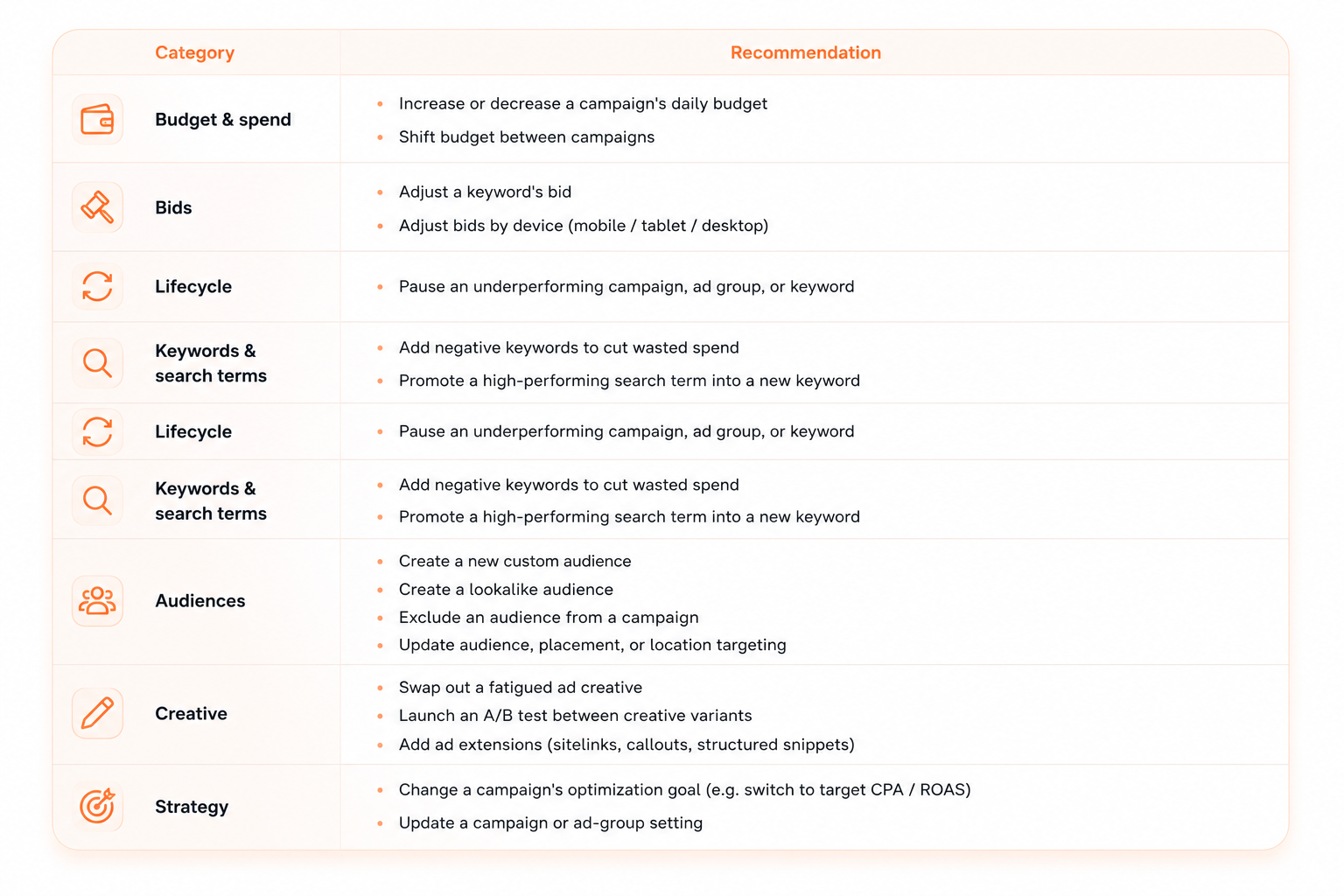
A full catalog of the real ad operations Adlyse agents can execute today across Google Ads, from budget and bids to creative, audiences, and strategy.

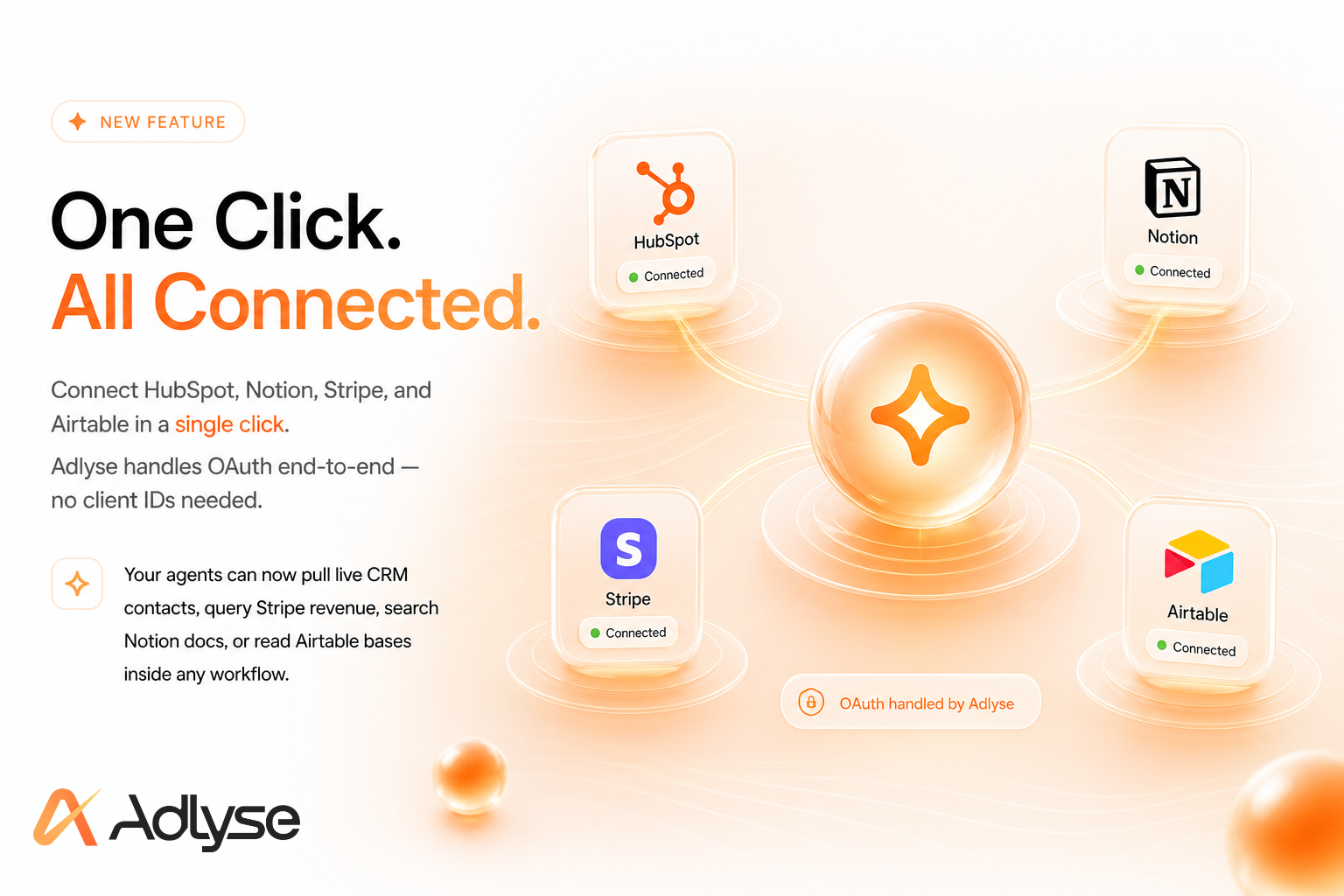
Four major upgrades to Adlyse: one-click HubSpot/Notion/Stripe/Airtable connectors, Search Terms in reports, dashboard workflow scheduling, and branded email steps in workflows.

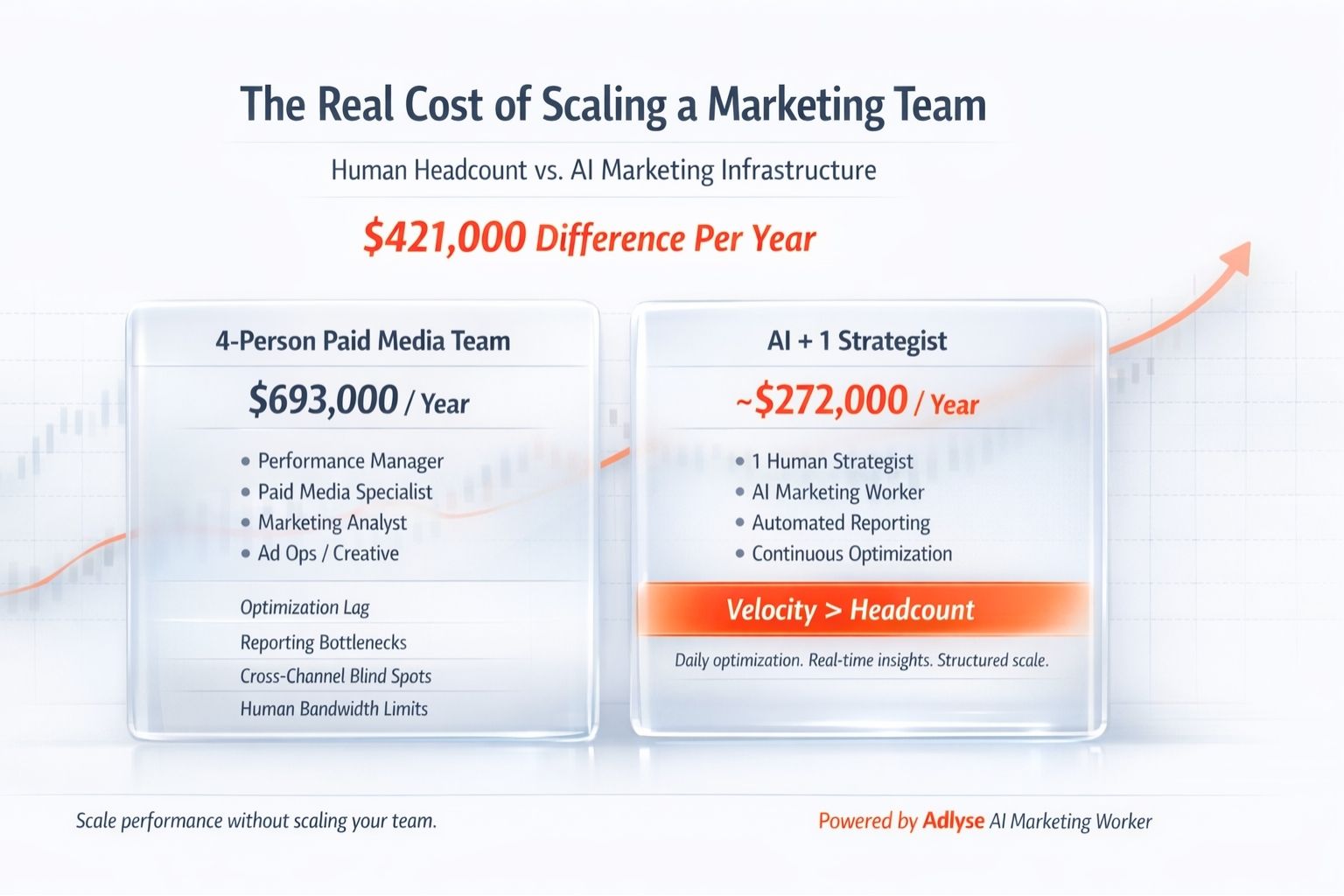
Most companies don't have a marketing performance problem. They have a marketing infrastructure problem. When you break down the actual cost of a traditional paid media team, the numbers become hard to ignore.

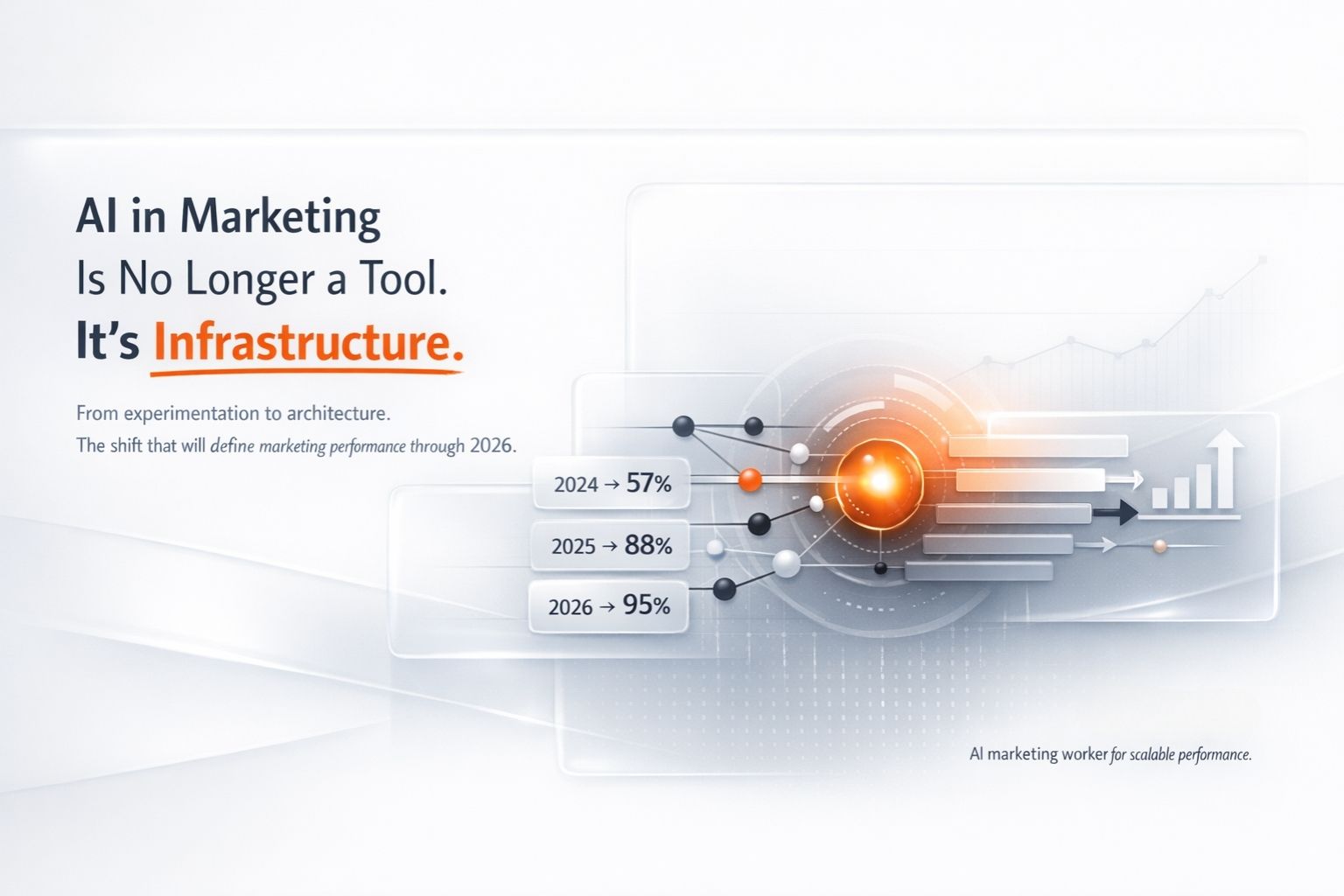
In 2024, AI was something marketing teams experimented with. By 2025, it became something they used daily. By 2026, it's becoming the infrastructure they build on. This shift isn't incremental. It's structural.

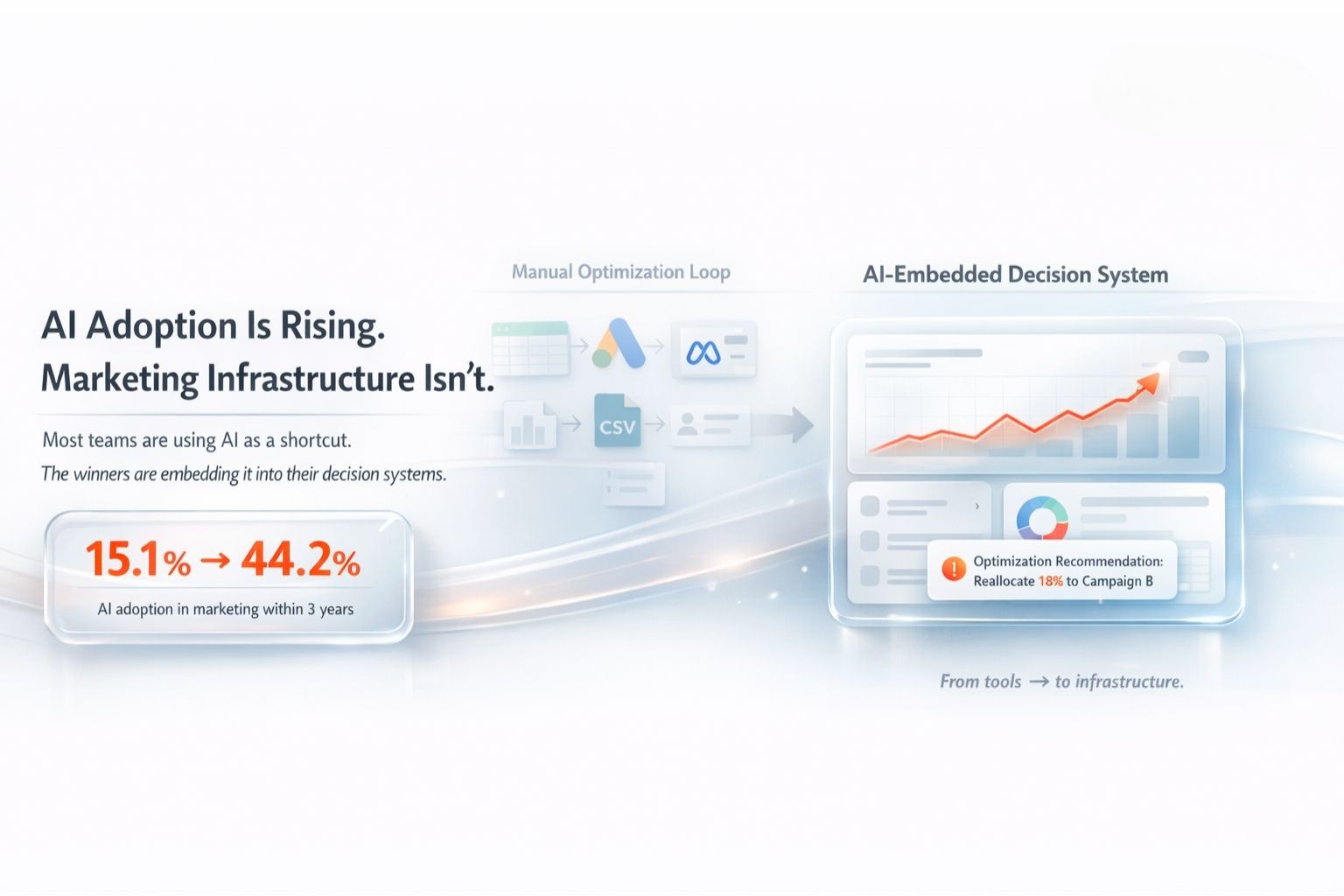
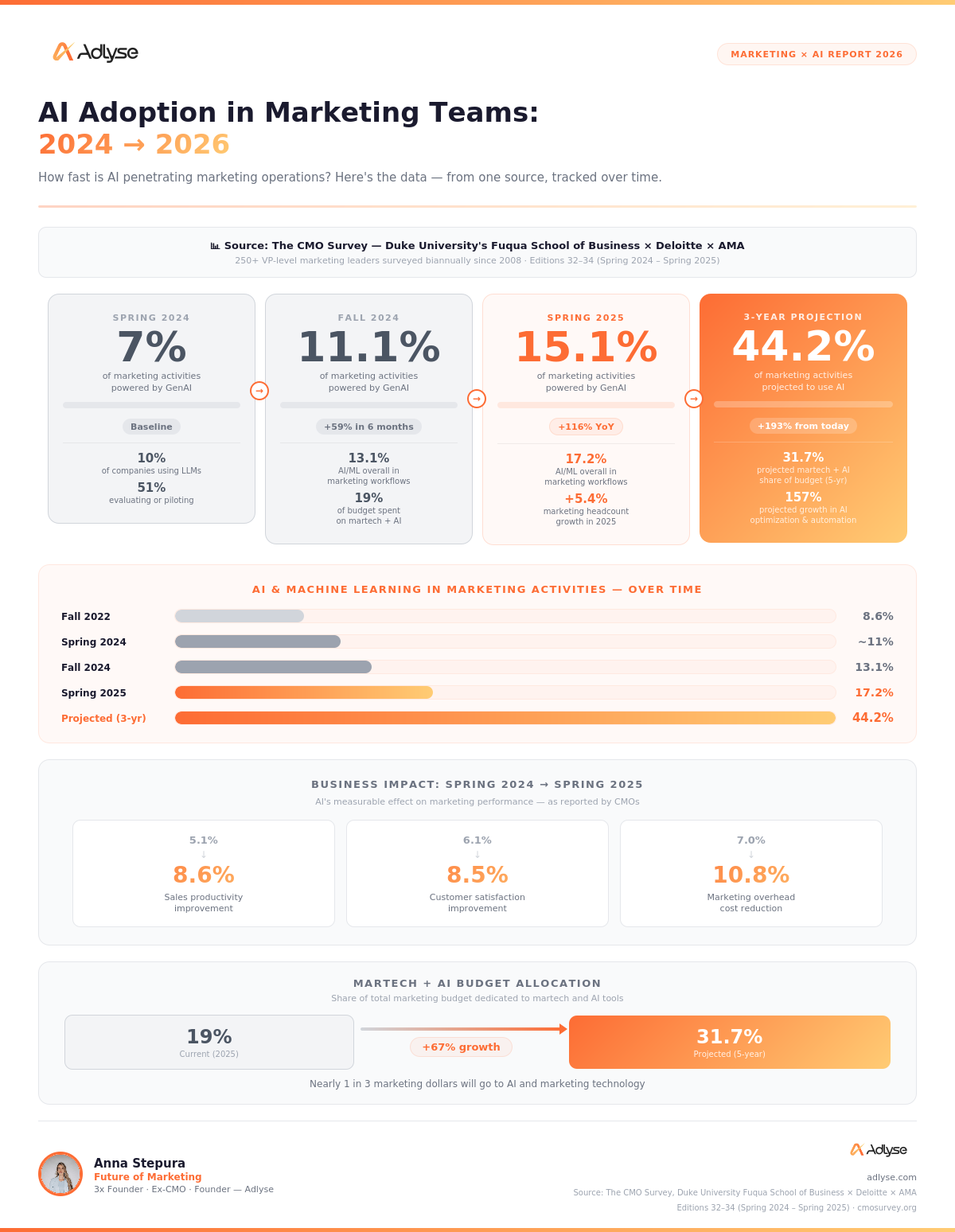
AI adoption in marketing teams has reached 15.1% and is projected to hit 44.2% within three years. That's not incremental growth. That's a structural shift. But most companies are still using AI as a tactical shortcut, not as marketing infrastructure.

AI isn't eliminating marketing. It's eliminating manual execution layers. Execution is being automated. Orchestration is becoming premium. The question is whether your marketing infrastructure is built for the shift.

Auditing a Google Ads account means systematically identifying what's wasting spend, what's driving results, and why performance is trending up or down, so you can fix problems before they scale.

Focus on performance signals tied to your business goals, not just raw numbers. Evaluate metrics like conversion rate, CPA, and ROAS, compare them to benchmarks, and analyze trends over time.

AI improves agency profitability by automating repetitive work, reducing manual analysis and reporting, and enabling faster, better decisions without adding headcount.

You can improve your Google Ads ROAS quickly by eliminating wasted spend, reallocating budget to proven revenue drivers, and aligning bidding with accurate conversion value signals.

AI can increase conversions in Google Ads by analyzing performance data faster than humans, identifying hidden inefficiencies, and enabling proactive optimization before wasted spend accumulates.

Your AI worker can now analyze, optimize, and report on Google Ads e-commerce campaigns with far greater accuracy and speed—featuring product-level analysis, margin-aware optimization, and instant visual reporting.

We've released two new features to make your workflow faster and easier—visualize campaign metrics directly in Adlyse and connect MCC accounts for simplified multi-account management.

How AI orchestration creates an intelligent layer between your team and tech stack, enabling autonomous optimization across all marketing platforms.

Recent studies show that most marketing budgets disappear into ineffective campaigns. Here's how data-driven automation can turn that around.

Lack of transparency, misaligned incentives, and outdated strategies are forcing CMOs to rethink their agency relationships.

Multi-touch attribution is broken. Here's how advanced AI attribution modeling gives CMOs the clarity they've been missing.

CMOs are shifting from gut-based decisions to predictive analytics. Learn how AI workers are transforming performance marketing.

A detailed cost analysis showing why CMOs are increasingly choosing AI-powered solutions over traditional hiring.

The average CMO manages 120+ marketing tools. Here's how consolidation with AI workers is simplifying operations.
Get weekly insights on AI marketing, attribution strategies, and CMO best practices