Written by
Anna Stepura
CEO & Co-founder, Adlyse
Marketer and AI expert. CEO and co-founder of Adlyse.
Connect on LinkedInFor the first time in a long time, there's a genuinely new place to buy attention: sponsored answers inside ChatGPT. When someone asks the assistant what to use, buy, or try next, a labeled ad can appear right in the conversation — at the exact moment of intent, in a surface hundreds of millions of people now open every day.
That's exciting, and it's also easy to over-read. A lot of teams assume ChatGPT ads will behave like Google or Meta — plug in budget, get conversions. They don't, at least not yet. Below is what the platform actually is today, the numbers OpenAI publishes next to the numbers the market is seeing, why the clicks so often don't convert, and a clear way to decide whether your brand should be there at all.
What a ChatGPT ad looks like
An OpenAI ad is a small, clearly labeled card at the bottom of the assistant's answer — a favicon and advertiser name, an Ad tag, a short headline, a line of copy, an optional image, and a link. OpenAI is explicit that ads never change the answer itself. They're deliberately tiny and unobtrusive. These are real examples:
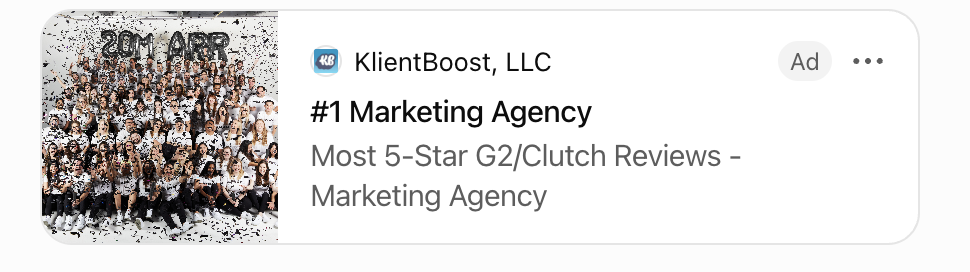

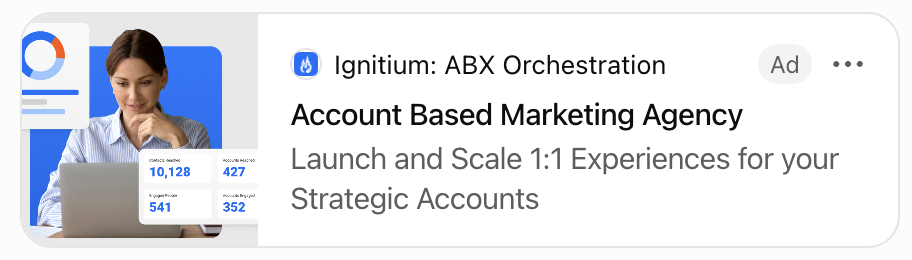
Real ads as they render at the bottom of a ChatGPT answer — small by design.
How the platform works
You run campaigns from OpenAI's self-serve Ads Manager (beta). You pick one of two objectives — Reach (CPM) or Clicks (CPC) — and ads are placed through a relevance-weighted, second-price auction, so your bid and your relevance both matter.
The big difference is targeting. There are no keywords, no audience lists, no lookalikes, no retargeting, and no device targeting. You get country targeting plus context hints — short, thematic descriptions of the conversations you want to appear in. Behind the scenes OpenAI matches on the current thread, general location, language, and, if the user has enabled it, past-chat signals. Advertisers receive no user data — chats, names, emails, IPs, and precise location stay inside ChatGPT — and OpenAI says it won't show ads to accounts it predicts belong to users under 18. The official basics are in the OpenAI Help Center.
What OpenAI shipped recently
This is a young platform that's moving quickly, so it's worth knowing the shape of the last few months before you judge it:
February 2026 — the pilot
Ads first appeared inside ChatGPT for U.S. users on the Free and ChatGPT Go tiers, with a handful of large launch partners and high minimum spends.
Cost-per-click bidding
Buying started CPM-only. OpenAI added CPC so you can align spend with clicks, not just impressions — recommended entry bids land around $3–5.
Self-serve Ads Manager (beta), July 2026
The self-serve platform opened and the big spend minimums came off, putting ChatGPT ads within reach of small and mid-market brands, not just holdcos.
Measurement: OAIQ pixel + Conversions API
A JavaScript pixel and a server-to-server Conversions API now let you track post-click purchases, leads, and sign-ups, with event deduplication and support for web, app, offline, and in-store events.
A partner ecosystem
OpenAI has been wiring in ad-tech and creative partners — names like Adobe GenStudio, Criteo, StackAdapt, Pacvue, and Kargo, alongside the major agency holding companies — so campaigns can plug into tools teams already use.
Useful to know, but notice what's still missing: no demographic or audience targeting, no retargeting, and only country-level geo. The customization is real, but it's early — you're steering with context and creative, not the dial-heavy controls you're used to.
What they say vs. what we see
OpenAI is reportedly aiming for billions in ad revenue this year and building toward a much larger business over the next few years — which is exactly why the pricing is still friendly. Right now CPCs sit around $3–5 and CPMs roughly $25–60, with no meaningful spend minimum. Cheap, novel, and full of intent-rich conversations.
Here's the honest part. Across the tests the market has shared, and across what we see running these campaigns for our own customers at Adlyse, ChatGPT ads behave much more like display than like search. Click-through rates cluster around ~1% (roughly 0.5–2%). CPCs land on par with Google and several times higher than Meta. And conversions are the weak spot — well below either incumbent, with cost-per-lead that's often high or, in plenty of cases, no tracked conversions at all. Side by side:
| Metric (all-industry avg.) | OpenAI Ads (ChatGPT) | Google Search | Meta (FB/IG) |
|---|---|---|---|
| Click-through rate | ~1% (0.5–2%) | 6.64% | 1.55% |
| Cost per click | $3–5 | $5.42 | $0.78 |
| Conversion rate | Very low / thin | 8.18% | 8.2% |
| Cost per lead / acq. | High or untracked | $66.69 CPL | $30.00 CPA |
Sources. Google Search: 2026 all-industry averages from WordStream / LocaliQ (13,000+ U.S. search campaigns, Apr 2025–Mar 2026). Meta: 2026 all-industry Facebook averages via TheeDigital, based on WordStream data. ChatGPT figures are early reads from OpenAI's own guidance and campaigns the market has shared — direction, not a settled rate card.
Read the table as one sentence: the click is priced like Google but carries less intent, and the conversion side is where the real gap shows. A cheap, engaged impression is not the same as a customer — and on ChatGPT that distance is longer than teams expect.
The gap people don't expect
Why the clicks don't convert
It's not one thing — it's the combination. Here are all the reasons we and the market keep running into:
- 1
A different mindset
People open ChatGPT to get an answer, not to shop. The intent behind a prompt is usually lower down the funnel than the intent behind a search query, so the same click is worth less.
- 2
The assistant often answers instead of the ad
ChatGPT frequently gives a complete answer — sometimes naming options directly — so there's simply less reason to click out. And if a user isn't satisfied, they re-prompt rather than click. Why click when you can just ask again?
- 3
A more casual audience
Ads run on the free and logged-in tiers, which skews toward exploratory, curious users rather than ready-to-buy ones. Under-18 accounts are excluded, but that doesn't make the rest high-intent.
- 4
Blunt targeting
With only context hints and country, you can't concentrate budget on your highest-intent moments the way keywords, audiences, or retargeting let you. Spend spreads across conversations that are on-topic but not in-market.
- 5
Low scrutiny, quick bounce
People trust the assistant's framing and click loosely, then leave fast. We see short sessions and thin engagement — hallmarks of traffic that's curious, not committed.
- 6
Literal beats clever
The creative that earns clicks states the offer plainly and mirrors the user's question. Brand-y, clever copy consistently underperforms here — which trips up teams bringing a social-first creative playbook.
- 7
Platform maturity and tracking gaps
There's no mature conversion-objective bidding yet, reporting can lag, and attribution leaks — reported clicks don't always show up in your analytics. So even the conversions that do happen are easy to under-count.
What this looks like in practice
The reasons above are abstract until you watch a single session play out. Here are three patterns we see again and again — each one is a place the funnel quietly leaks.
The answer replaces the ad
A user asks, “what's the best tool to automate my Google Ads?” ChatGPT returns a tidy, confident shortlist — and your sponsored card sits right underneath it. The user has already gotten what they came for. They read the assistant's paragraph, maybe copy a name into a new search, and never touch your ad. On Google that same query is a click; here the answer absorbs the intent before the ad can.
Curious, not committed
Someone does click. They land on your pricing page, spend three seconds, and bounce. They weren't evaluating vendors — they were exploring a topic mid-conversation and tapped out of idle interest. The click is real and cheap; the intent behind it isn't the buy-now intent your landing page was built to convert. High bounce, sub-10-second sessions, no form fills.
The click that never lands
Your ChatGPT dashboard reports ~140 clicks for the day. You open GA4 expecting a bump and see nothing — no session spike, no referral traffic, no matching UTMs. The clicks are counted on OpenAI's side but the referrer data doesn't survive the hop, so even the visits that do happen are invisible to your analytics. You can't optimize what you can't see, and you may be under-counting the few conversions you do get.
Notice the through-line: none of these are creative problems you can fix with a better headline. They're structural. The surface is designed to give people answers, the audience is mid-thought rather than mid-purchase, and the plumbing that ties a click to a sale is still being built. Better copy nudges CTR; it doesn't close the intent gap. That's why we treat conversions here as a bonus, not the goal — and measure success on cheap reach and learning while the channel is still young.
Should your brand be there?
My honest answer: probably yes — but for the right reason, and only after one basic check.
First, the check: are your buyers actually on ChatGPT? If your ideal customer skews to a demographic or a context that's unlikely to be prompting an assistant — a very specific age group, a niche B2B buyer who lives elsewhere — this isn't your channel yet, and no amount of clever targeting will fix that. Do the audience math before you spend a dollar.
If your audience is there, then go — but with the right expectation. Treat ChatGPT ads as an experiment and visibility budget, not a conversion engine. You're buying presence in a new, fast-growing surface and learning its mechanics while it's still cheap and uncontested. Don't expect it to move the business the way Google and Meta do; expect to be where people increasingly are. The brands that lean pro-AI and show up in these new places early are the ones building the habit — and the cheap learning — that pays off as the surface matures and gets more expensive.
Test it beside your other channels
At Adlyse you can run OpenAI Ads next to Google, Meta, TikTok, and Microsoft from one place — same ad list, same reporting, same one approval — so testing a new channel doesn't mean learning a new tool or babysitting another tab.