Ads inside AI answers are now a channel, and both Google and OpenAI are scaling them into the holiday season. On Google's October 28, 2026 earnings call, Philipp Schindler said Google is "scaling high-quality ads within both AI Overviews and AI Mode to more users and more queries." ChatGPT ads are sold in 89 countries. Treat both as tests with their own reporting, not as extra volume on your existing search numbers.
What did Google say about ads in AI Mode?
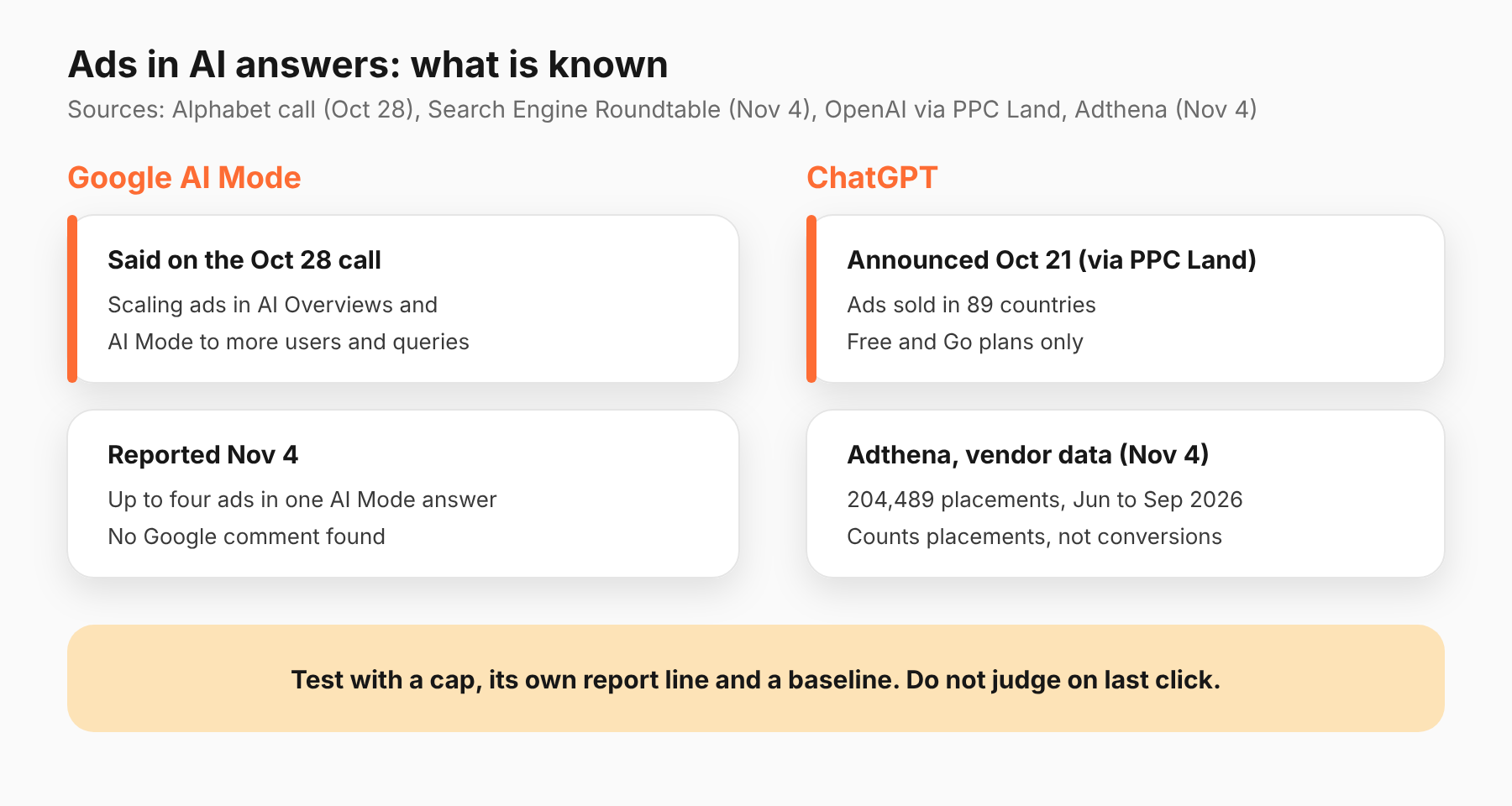
On the Alphabet Q3 2026 call on October 28, Schindler, Google's Chief Business Officer, said Google is scaling ads in AI Overviews and AI Mode to more users and queries, including international markets and multiturn ads in the US, per the call transcript. The same transcript has him saying:
- "Click-through rates are already similar between sponsored and organic product list items within AI Mode."
- "The majority of AI Mode queries are incremental, creating more monetization opportunities over time."
- Search growth was affected by "the lower monetization we were seeing in AI Mode."
The last point is the useful one. Google says AI Mode currently earns less per query, and it is working to close that gap. More ads is part of how.
These are company statements about its own surfaces. They are not advertiser results.
Is Google showing four ads in AI Mode?
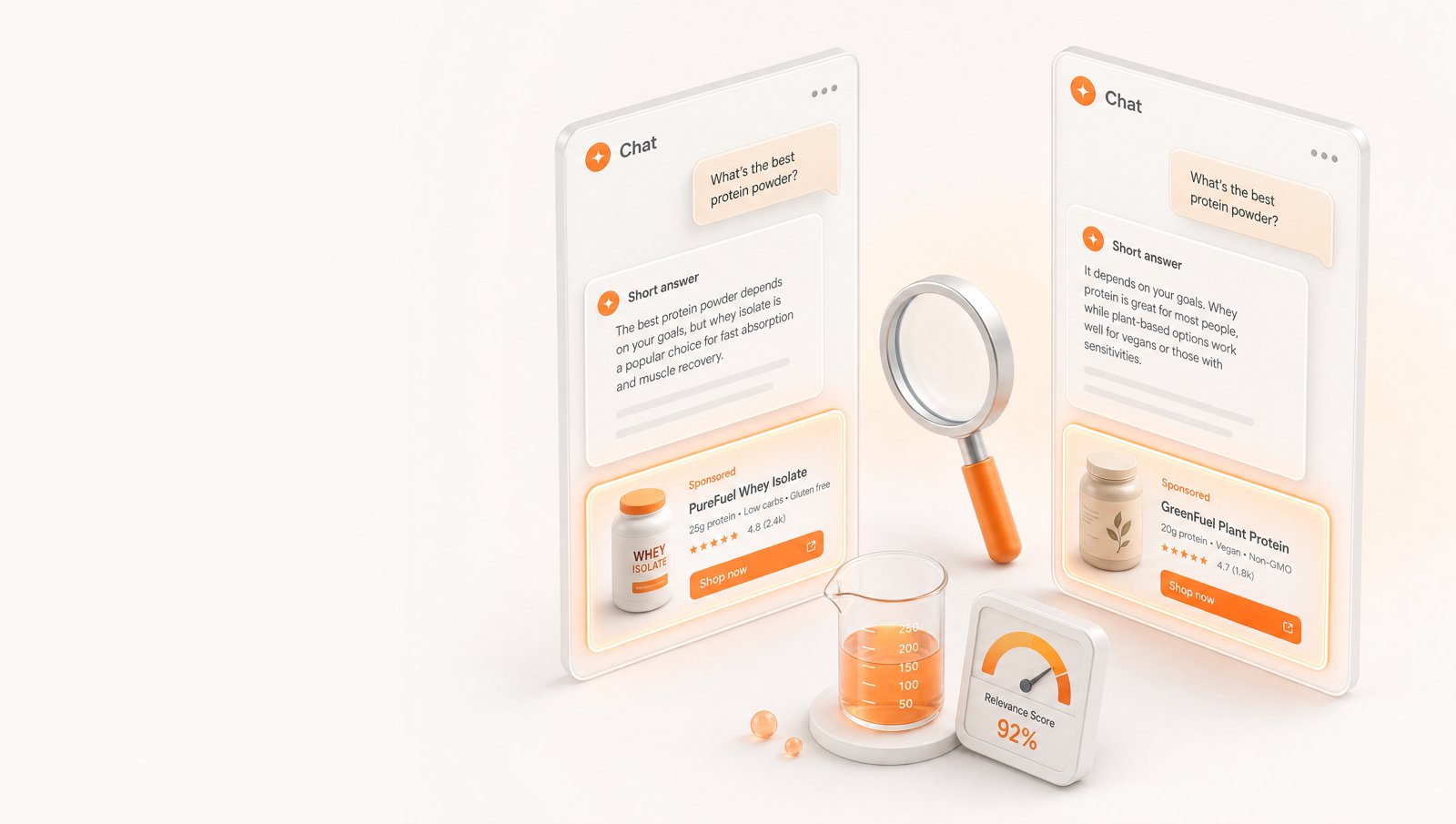
It has been seen. Search Engine Roundtable reported on November 4 that Google "can now show up to four Google Ads in the AI Mode responses for a single query," up from the one to three observers had described. PPC Land says Search Engine Watch reported the layout by November 2, with the extra ad at the bottom of the response under a "Sponsored" label.
Neither report includes a comment from Google on the layout, how widely it shows, or whether it is a test. We could not find a Google page that confirms it. Treat it as an observed change, not a confirmed rollout.
How many ChatGPT ads are running?
Adthena, a search intelligence vendor, released a holiday report on November 4, 2026. It says it tracked 204,489 ChatGPT ad placements between June and September 2026, and that the advertiser base grew nearly six times in two months. It also says:
- Apparel, consumer electronics and travel drove about 95% of placements. Toys and games grew fastest.
- ChatGPT ads often appeared on research queries, not purchase-ready ones: 83% of beauty ads, 69% of travel ads and 67% of toys and games ads.
- Google AI Overviews appearances rose 536% in Australia, 160% in the UK and EU, and 89% in the US, year over year. Adthena counted 175,100 US paid placements in AI Overviews.
This is vendor data from a sample Adthena tracks. It is useful for direction, not for sizing your own opportunity. We have not seen its method.
OpenAI's own announcement, as reported by PPC Land, says ChatGPT ads are now sold in 89 countries and appear only on the Free and Go plans. Plus, Pro and Enterprise remain ad-free.
Why does the query stage matter?
Because ads that show up early in a decision behave differently from ads at the point of purchase.
If 67% to 83% of ads in some categories appear against research queries, as Adthena reports, then a last-click view will often undersell them. A shopper who asks an AI tool what to buy may click nothing, return later through branded search, and convert through a different channel. Your reporting will credit the later click.
That is the same attribution problem you already have with upper-funnel video or social, and the answer is the same. Plan how you will read the result before the money moves. Our guides to incrementality testing and to reading cross-platform numbers cover how.
How should you test ads in AI answers before the holidays?
This section is our opinion. The facts above are from the sources named.
Cap it. Set a ceiling and an end date. Black Friday week is a poor time to learn a new surface with open-ended spend.
Give it its own line in the report. Do not let AI Mode traffic blur into standard search results, or ChatGPT results into "other." If a platform does not break it out, note that as a gap.
Define what a win looks like first. Pick one: new customers, assisted conversions, or blended efficiency. Write it down before launch.
Hold a baseline. Keep a comparison group, such as a region or campaign set with no spend on the surface, so you can see whether the channel adds anything.
Check the brand and product fit. Adthena's category mix is concentrated. If you sell outside apparel, electronics and travel, the early data says less about you.
Keep humans on approvals. If an agent manages spend on a new surface, confirm which actions need a person. See AI autonomy guardrails and our notes on where ChatGPT ads work and where they don't.
What does "more ads in AI Mode" mean for your search budget?
This section is our opinion. Google's remarks suggest more ad inventory on AI surfaces over time, but we found no source that says how AI Mode ads are reported, priced or matched to your keywords and campaigns.
So treat your search reports as the place to look for changes, not as a place to assume them. Check whether impression share, click mix and cost per click moved in the weeks since late October. Ask your Google rep in writing how AI Mode and AI Overviews placements are labeled in your reports. If the answer is "not separately," record that, because it limits what you can conclude about this channel.
Do not shift a large share of branded or high-intent budget on the strength of an earnings call. Shift a small test amount and watch.
What don't we know yet?
- Whether the four-ad layout is permanent. Google has not commented in anything we read.
- What AI Mode ads cost you. Google says monetization is lower than standard search. That does not tell you your cost per click or per sale.
- Whether ChatGPT ad placements convert. Adthena counts placements and query types. It does not report conversions.
- How these surfaces split holiday demand. Neither Google's transcript nor Adthena's report covers holiday spend. The transcript does not mention holiday shopping at all.
What should you do next?
Pick one AI-answer surface to test, set a cap and write down the result you expect. If you run changes through Adlyse, each approved change ships with a hypothesis and is graded improved, hurt or neutral. A new surface is where that habit matters most, because you have no history to compare against.