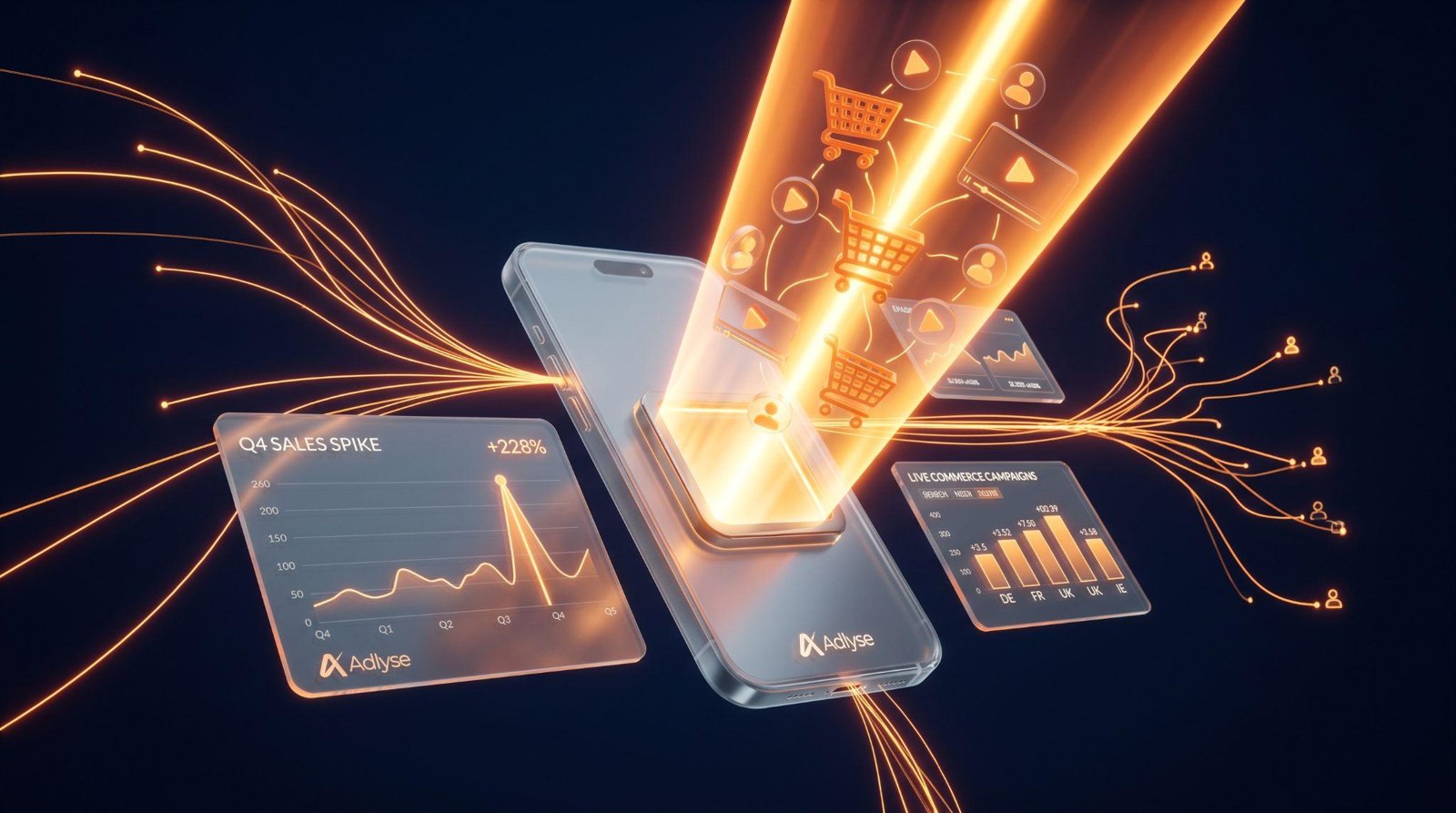
Instagram Live Video Ads started rolling out September 29, 2026, extending a format that had previously existed only on Facebook. The mechanic is straightforward: a brand can pay to amplify a creator's existing live stream as a partnership ad, pushing it to audiences well beyond that creator's own followers. It arrives folded into Meta's broader Creator Marketing Hub (a merge of what used to be two separate tools, Creator Marketplace and Partnerships Ads Hub) and lands five weeks before the start of the Q4 shopping season, which is the part worth paying attention to if live commerce is anywhere on your roadmap.
Instagram Live Video Ads began rolling out September 29, 2026, bringing a format previously exclusive to Facebook over to Instagram.
The core mechanic: a brand pays to amplify a creator's live content as a partnership ad, extending its reach past the creator's own follower base.
It launches inside Meta's unified Creator Marketing Hub, which merged the former Creator Marketplace and Partnerships Ads Hub into one surface with discovery filters, one-click ad creation, and creator-brand messaging.
Separately, Meta has been rolling out virtual card checkout (Mastercard and Visa partnerships, generating temporary one-time card numbers tied to a shopper's existing payment account) since earlier in 2026, part of the same broader commerce push.
No published performance benchmarks exist yet for the format; this is a day-one rollout note, not a results report.
How does an Instagram Live Video Ad actually work?
The format doesn't create new content. It takes a livestream a creator is already running and turns it into a paid placement a brand can push to people who don't already follow that creator. That's a meaningfully different mechanic than a standard feed or Reels ad: the creative is a live, in-progress stream rather than a pre-produced asset, and the audience the ad reaches is cold by design, not retargeted or lookalike-modeled from an existing customer list.
Practically, that means the brand's job shifts from "approve a finished ad" to "choose which live moment is worth amplifying, and to whom." If a creator's livestream includes a product demo, an unboxing, or a live Q&A relevant to your offer, that's the inventory this format is built to extend, not a separate ad unit you'd brief and produce from scratch.
Why does the Creator Marketing Hub matter here, beyond the live-ads feature itself?
Because Live Video Ads didn't launch as a standalone tool. It launched inside a newly unified hub that merged Meta's creator-discovery and partnership-ad infrastructure into one place: discovery filters for finding creators already using your products, content-level permissions with expiration dates, one-click ad creation from existing creator content, and direct messaging between brands and creators, all through the same interface.
That consolidation is the more durable change for a Practitioner planning Q4 campaigns. Before this, running a creator partnership ad and discovering new creators organically were separate workflows. Now they sit in one hub, which lowers the operational cost of testing live-ad amplification as one option among several creator-partnership formats, rather than a separate initiative requiring its own tooling and process.
What does the virtual card checkout rollout have to do with live video ads?
They're part of the same broader push, not the same feature. Meta has been rolling out virtual card checkout, built with Mastercard and Visa, since earlier in 2026: a shopper checking out on-platform gets a temporary, one-time card number tied to their existing payment account, rather than entering card details directly. The stated goal is reducing payment friction and increasing purchase confidence for on-platform transactions.
For live commerce specifically, that matters because a live video ad's natural next step, for a viewer who wants to buy something they just saw, is a fast, low-friction checkout. A live demo that drives someone to a slow or unfamiliar checkout flow loses more of that momentary intent than one that doesn't. Whether to prioritize optimizing your live-ad creative or your on-platform checkout experience first depends on which one is actually the weaker link in your specific funnel, worth checking before assuming either.
Is this ready to be a Q4 priority, or is it too new to plan around?
That depends on what you're already doing with creators. If you already run creator partnerships and have livestreams happening as part of that relationship, testing amplification on a contained set of them ahead of Black Friday and the holiday season is a low-risk way to learn the format before competitors do, especially since no third-party performance benchmarks exist yet to tell you what "good" looks like.
If you don't currently run any creator-partnership program, standing one up from scratch specifically to test a day-one ad format inside a five-week Q4 runway is a heavier lift than the format itself justifies on its own. The more honest sequencing for that case: build the creator relationship first, treat live-ad amplification as a feature you'll have available once that relationship exists, not the reason to start one.
What should a team running Instagram ads check this week?
Confirm the feature is visible in your ad account. A September 29 start date for a rolling launch doesn't mean universal same-day availability; check directly rather than assuming absence means it hasn't reached you yet.
Identify which existing creator relationships have live content worth amplifying. This format extends reach on content that already exists; it doesn't give you new content to amplify if your current creator partnerships don't include a live component.
Decide whether checkout friction, not ad reach, is your actual bottleneck. If people already discover your product through creators but drop off at checkout, the virtual card checkout rollout may matter more to your Q4 numbers than the live-ad format itself.