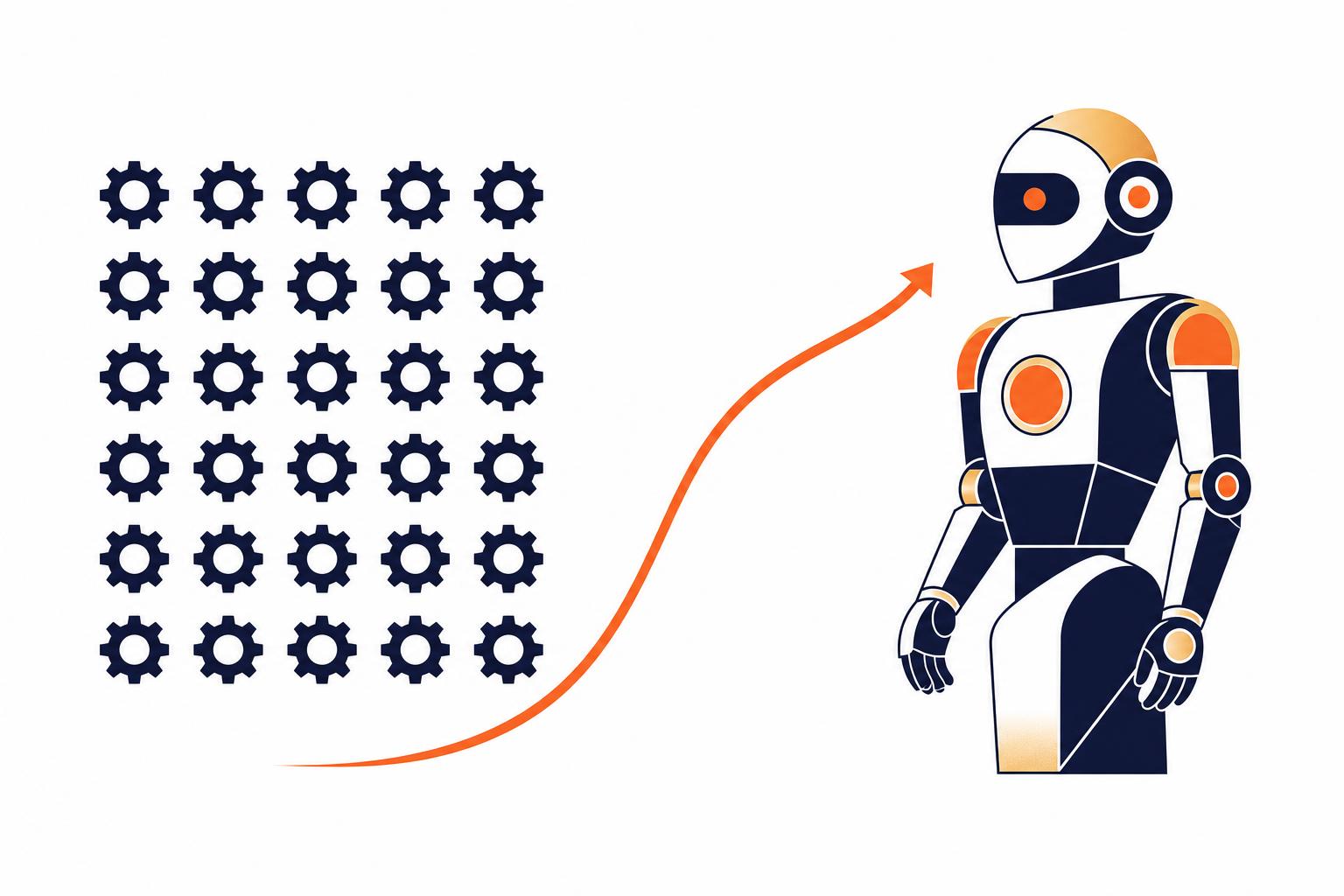
- PMax optimizes across Google's own surfaces; Advantage+ optimizes across Meta's. Neither can see the other.
- Both are bidding and delivery engines. Adlyse is a proposal, approval, and verdict layer that runs above them.
- Adlyse never executes without a human clicking approve. There is no autonomous mode.
- Changes that grade as "hurt" against their stated hypothesis are reverted automatically.
- The honest trigger for adding a layer: budget split across 2+ of the six platforms and leadership asking which change caused the result.
Use both. Performance Max and Advantage+ are not competitors to Adlyse, they are a different layer of the same stack. They allocate budget and creative automatically inside one platform's inventory, and they are good at it. Adlyse sits above that layer: it proposes changes across Google Ads, Meta, Microsoft Ads, TikTok, AppLovin, and OpenAI's ChatGPT Ads, requires a human approval click before anything executes, and grades each change against a hypothesis stated before the spend happened. If you are running PMax or Advantage+ and they are working, keep running them. The question worth answering is what sits on top, not what to rip out.
Here is the part that trips teams up. The two things platform-native AI cannot do are not bugs, and no future release will fix them. They are definitional. A platform cannot allocate budget against the five platforms it cannot see, and a result explained in a platform's own reporting is not the same object as a verdict graded against a prediction made beforehand. Every "PMax alternative" pitch that treats those as flaws is selling you a replacement for something that does not need replacing.
What does Performance Max actually optimize?
Performance Max takes a budget, a conversion goal, a set of assets, and a bidding strategy, and distributes delivery across Google's inventory: Search, Shopping, YouTube, Display, Discover, Gmail, and Maps. You do not buy those placements individually. You give the campaign an objective and it decides, per auction, where a given impression is worth buying and at what price.
That is a genuinely hard problem, and the machine is better at it than a human with a spreadsheet. A media buyer cannot evaluate a YouTube pre-roll impression against a Shopping click against a Discover placement in the 200 milliseconds before the auction closes. PMax can, and it does it continuously against a signal set, conversion history, audience signals you supply, asset performance, that is richer than anything exposed in the reporting UI.
What you actually control inside it
The controls are real, but they are inputs rather than levers:
- Asset groups, the creative and copy the system has to work with, grouped by theme.
- Audience signals, a starting hint, not a targeting restriction. The system is free to go outside them.
- Listing groups, for retail campaigns, which products are eligible.
- Brand exclusions and campaign-level negative keywords, the main way to stop Search traffic you do not want.
- Bid strategy and target, tROAS or tCPA, plus the budget.
What you do not control is the allocation across surfaces, and the reporting on that allocation is coarse by design. You can see that the campaign spent your budget and returned conversions. Attributing the return to a specific surface, at the granularity you would get from separate Search and Shopping campaigns, is not something the campaign type is built to give you.
What this is NOT: PMax being opaque is not the same as PMax being wrong. The trade is explicit, you surrender channel-level control and channel-level reporting in exchange for auction-level optimization you could not perform manually. For most accounts that is a good trade.
What does Advantage+ actually optimize?
Advantage+ is Meta's equivalent bet, applied to Meta's inventory: Facebook, Instagram, Messenger, and Audience Network. The shopping and app campaign variants collapse the audience, placement, and creative decisions into a single automated setup, then let the delivery system find buyers across those surfaces.
Meta's version leans harder on creative than Google's. The system will run many creative variants, kill the ones that do not earn delivery, and concentrate spend on what does, which is why "feed the algorithm more creative" is the standard operational advice for Advantage+ accounts and why the campaign type rewards volume production more than granular audience construction.
The same trade applies, with one Meta-specific wrinkle. Since the iOS App Tracking Transparency changes, a meaningful share of Meta's reported conversions are modeled, statistically estimated to fill gaps where the signal was never observed. That modeling is a reasonable engineering response to a real measurement problem. It also means the number Advantage+ optimizes toward and the number it reports back to you are partly an estimate produced by the same party whose performance is being evaluated. That is not an accusation. It is a structural fact about who holds the scorecard.
Where do the two structural gaps actually sit?
Two places, consistently. Neither is a flaw in PMax or Advantage+.
Gap one: nobody owns the split
PMax has no visibility into what Advantage+ is doing with the same customer, the same creative concept, and the same monthly budget. Advantage+ has no visibility into PMax. Each optimizes its own slice perfectly and is structurally incapable of asking whether the slice is the right size.
Here is the model, run it with your own numbers, because the figures below are illustrative, not measured. Say you run $200,000 a month, split $120,000 to Google and $80,000 to Meta, and that split was set in a planning meeting two quarters ago. PMax optimizes the $120,000 beautifully. Advantage+ optimizes the $80,000 beautifully. If the correct split for this quarter's demand is actually $90,000 / $110,000, then $30,000 a month is sitting in the wrong place, and both platforms will report a healthy result, because both are measured against the slice they were handed. The waste never appears in either platform's reporting. It cannot. The comparison that would expose it happens above both of them.
The number that matters: zero. That is how many of the other five platforms any one platform's automation can see when it decides what an impression is worth.
Gap two: a reported result is not a graded verdict
When a platform-native campaign performs, you get a result stated in that platform's terms, using that platform's attribution model, on that platform's clock, partly from that platform's conversion modeling. That is a report.
A verdict is a different object. A verdict requires a prediction written down before the change, "shifting budget from this asset group to that one will improve blended CPA by X over 14 days", and then an independent check of whether the prediction held. Improved, hurt, or neutral. The prediction has to be falsifiable, which means it has to be recorded before you know the answer.
What this is NOT: this is not a claim that platform reporting lies. It is a claim that a self-reported outcome and an externally graded prediction are different kinds of evidence, and only one of them survives the question "how do you know?" from someone who did not attend the meeting where the change was made.
How do rule-based, platform-native, and cross-platform agentic automation compare?
Three layers, often confused with each other:
| Rule-based automation | Platform-native AI (PMax, Advantage+) | Cross-platform agentic (Adlyse) | |
|---|---|---|---|
| Scope | One account, conditions you wrote | One platform's full inventory | Six platforms: Google Ads, Meta, Microsoft Ads, TikTok, AppLovin, ChatGPT Ads |
| Decides what? | Executes your if/then | Bids, placements, creative mix | Which change to propose at the account level |
| Learns? | No. Static until you edit it | Yes, within its own signal set | Yes, from graded outcomes across platforms |
| Human in the loop | You wrote the rule, then it runs | Inputs and budget only | Explicit approval click per change |
| Explains the result | Rule fired / did not fire | Platform-reported performance | Hypothesis stated first, then graded improved/hurt/neutral |
| Reverts a bad change | Only if you wrote that rule | Reallocates; no notion of "that change was wrong" | Automatic revert on a "hurt" grade |
| Fails when | Conditions shift and nobody updates the rule | Budget is split across platforms it cannot see | Account runs on one platform with one budget |
The row that matters most is the last one. Each layer has a failure mode, and the honest read is that they are different failure modes, not competing ones. Rule-based automation goes stale. Platform-native AI is blind past its own walls. A cross-platform layer is overhead you do not need if there is nothing to compare across.
What actually changes operationally when you add a layer above?
Four things change, and none of them involve touching your PMax or Advantage+ campaign structure.
- Proposals arrive instead of alerts. A monitoring tool tells you CPA rose 18% in campaign 4. A proposal layer tells you CPA rose, names the change it wants to make, states what it expects that change to do, and shows a before/after preview. The unit of work shifts from "investigate" to "approve or reject."
- Somebody has to click. This is the part teams underestimate. Approval is a real queue with a real owner, and if nobody owns it the queue backs up and the system does nothing. The guardrails, budget caps, a spend ledger recording what changed and when, and a kill switch that halts execution immediately, have to be configured before the first proposal, not after the first surprise.
- The weekly meeting changes shape. It stops being a recap of platform dashboards and becomes a review of a list: here are the changes we approved, here is what each predicted, here is how each graded. Some of those grades will be "hurt." That is the system working, not failing, those changes were already reverted automatically.
- Your buyers stop doing console labor. Adlyse does not set creative strategy, define your offer, or decide your audiences. It handles the mechanical scan-propose-execute-grade loop. The strategic work stays with your team, which is the point of "agents run it, humans lead" rather than a slogan attached to an autopilot.
When is platform-native automation alone genuinely enough?
Often. Three cases where adding a layer is overhead, not leverage:
- You are effectively single-platform. If 90% of spend is on Google, cross-platform allocation is not a live question. There is nothing to allocate across. Fix the 10% by moving it or accepting it, and skip the layer.
- Your current bottleneck is creative, not allocation. Advantage+ accounts starved of creative variants have a production problem. A governance layer above the campaign will not generate ads. Solve the actual constraint first.
- Nobody is asking "which change caused this?" If leadership is satisfied with platform-reported numbers and no one has been asked to defend a figure, the verdict layer is solving a problem you do not currently have. Wait until you do.
The trigger for adding one is specific, and both halves have to be true at once: budget is genuinely split across two or more of the six platforms, AND someone above you is asking which platform, or which specific change, drove the result. One without the other does not justify it. Multi-platform spend with no accountability pressure is fine on platform-native alone. Accountability pressure on a single-platform account is a reporting problem, not an allocation one.
Do you have to turn anything off?
No, and you should be suspicious of any vendor who says otherwise. A tool that requires you to dismantle working campaigns before it can demonstrate value is asking you to bet the account on its pitch.
The sequencing that makes sense: leave PMax and Advantage+ running exactly as they are. Add the layer above. Let it propose against the existing structure for a few cycles. Read the grades. If the proposals are improving things, you will see it in the verdict record, which is the whole reason the verdict record exists. If they are not, you have lost approval clicks and nothing else, the guardrails capped the downside before anything executed, and anything that graded "hurt" already reverted itself.
One edge case worth naming: if your account is a single PMax campaign carrying the entire budget, the proposal surface is thin. There are fewer meaningful account-level changes to test when the account is one campaign. Split the structure first if that is your situation, or accept that the layer has less to work with.
Frequently asked questions
Related reading
- How to Evaluate Agentic AI Marketing Tools Before They Touch Live Spend , a general evaluation checklist that applies whether or not platform-native automation is already in the mix.
If budget is split across platforms and nobody can say which change moved the number, that is the gap this layer fills.
Explore Adlyse