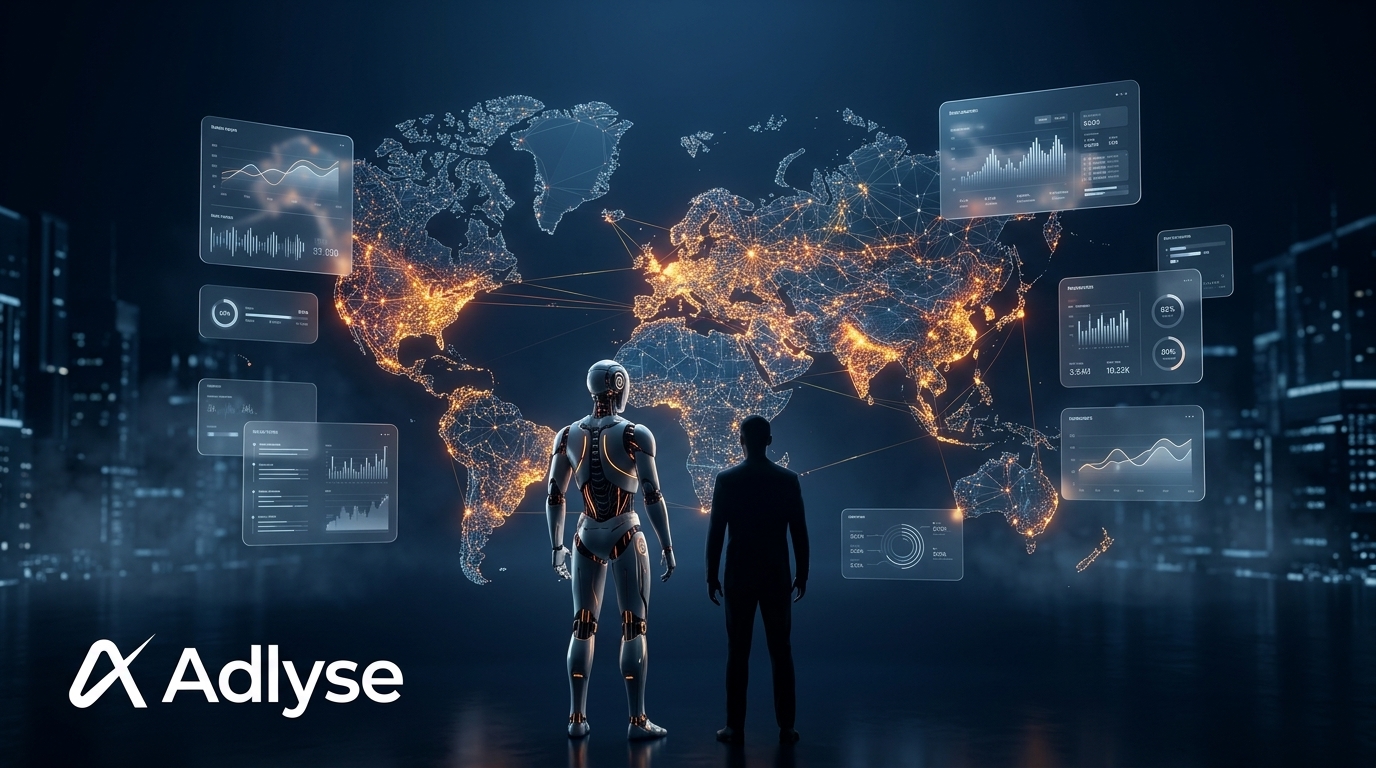
The Future of Marketing: AI Workers and Orchestration Across Tools
Higher ROAS. 10x less work.
Put Adlyse on your accounts. Daily audits, agentic optimization, and reports your clients actually read.
Request a demoIn today's fragmented marketing landscape, success isn't just about having the right tools—it's about having an intelligent system that can orchestrate them all. Enter AI workers: the autonomous agents revolutionizing how marketing teams operate across platforms.
The Challenge: Tool Overload
Modern marketing teams juggle an average of 15-20 different tools daily. From advertising platforms like Meta and Google Ads to analytics tools, CRMs, and automation software—each requires constant monitoring, manual adjustments, and cross-platform coordination.
The result? Marketing teams spend 60% of their time on tactical execution rather than strategic thinking. They're stuck toggling between dashboards, copying data between platforms, and manually implementing optimization strategies.
Key Insight
The average marketing team loses 15 hours per week to manual platform coordination and data transfer between tools—time that could be spent on strategy and creative development.
What is an AI Worker?
An AI worker is an autonomous agent that operates continuously across your entire marketing tech stack. Unlike traditional automation that follows rigid if-then rules, AI workers use machine learning to:
- Understand context and make intelligent decisions
- Learn from outcomes and improve over time
- Adapt strategies based on real-time performance data
- Coordinate actions across multiple platforms simultaneously
- Predict trends and proactively adjust campaigns
Think of it as having a tireless team member who monitors every campaign, analyzes every metric, and implements optimizations 24/7—but one that gets smarter every day and never needs sleep.
The Orchestration Layer: Connecting Everything
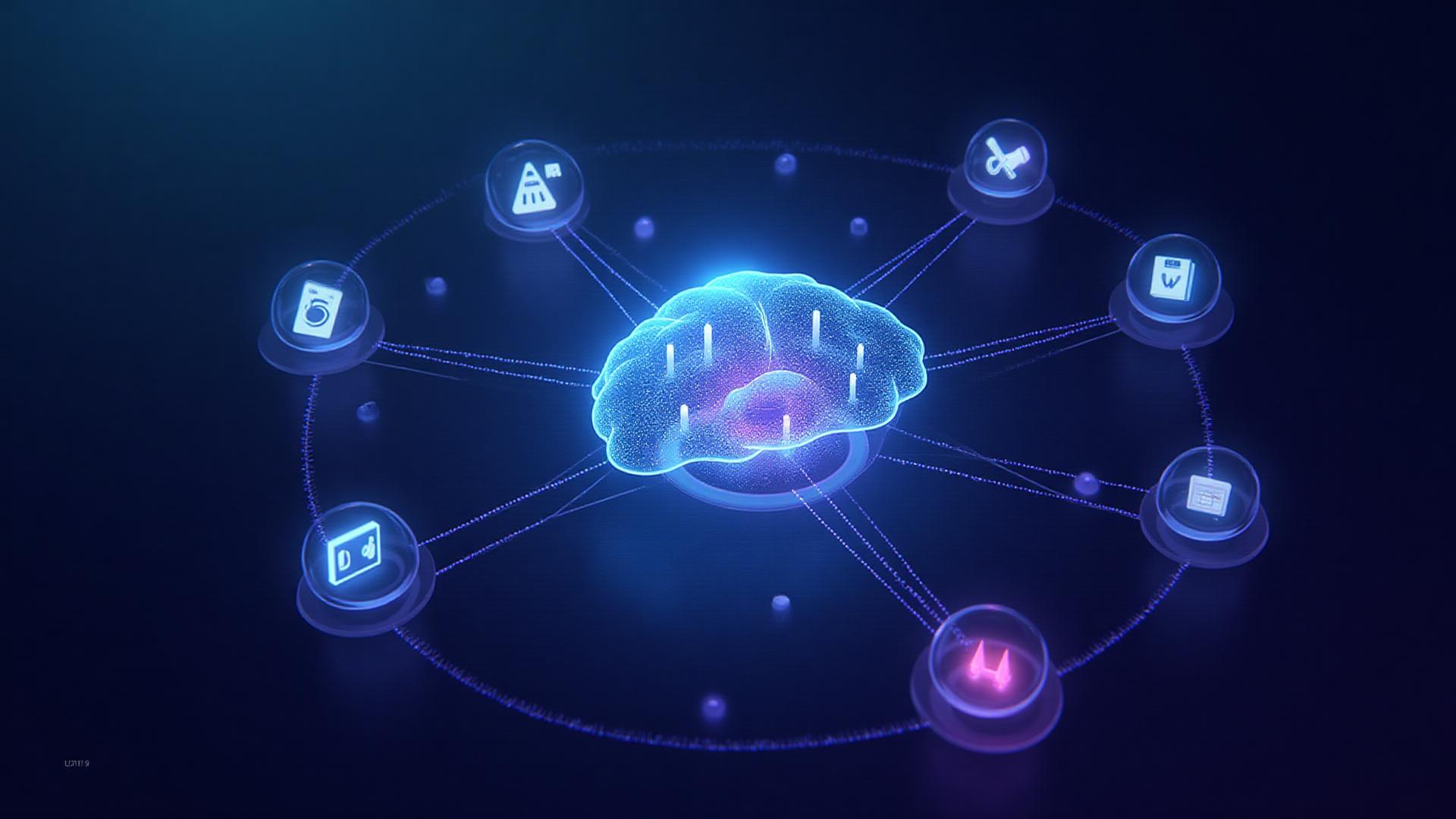
The true power of AI workers lies in their ability to orchestrate actions across your entire tool ecosystem. This orchestration layer sits between your team and your tech stack, creating a unified intelligence system that operates seamlessly across platforms.
How AI Orchestration Works
Unified Data Collection
The AI worker continuously collects data from all connected platforms—Meta Ads, Google Ads, LinkedIn, TikTok, your CRM, analytics tools, and more. Instead of siloed data, you get a complete, real-time view of performance.
Cross-Platform Analysis
Rather than analyzing each platform in isolation, the AI identifies patterns and insights across your entire marketing ecosystem. It understands how campaign performance on one platform affects another and optimizes accordingly.
Coordinated Execution
When optimization opportunities are identified, the AI worker executes changes across multiple platforms simultaneously. Budget shifts, audience targeting adjustments, bid changes—all coordinated for maximum impact.
Continuous Learning
Every action taken and every result observed feeds back into the AI's learning system. Over time, it develops a deep understanding of what works for your specific business, audience, and goals.
Real-World Impact: What Changes?
Speed of Optimization
Changes that used to take days now happen in minutes. An AI worker can identify underperforming ads, pause them, and reallocate budget to winners before you've finished your morning coffee.
Cross-Platform Synergy
No more siloed campaigns. Your AI worker coordinates messaging, targeting, and budget allocation across all platforms based on overall business objectives, not individual platform metrics.
Predictive Actions
Instead of reacting to changes, AI workers predict trends and adjust proactively. They can spot early signals of creative fatigue, audience saturation, or emerging opportunities before they're obvious.
Strategic Focus
With tactical execution automated, your team can focus on what humans do best: creative strategy, brand development, and customer understanding.
Case Study: E-Commerce Scaling
A mid-size e-commerce company was running campaigns across Meta, Google, TikTok, and Pinterest. They had a three-person team spending 30+ hours weekly on campaign management and optimization.
After implementing an AI orchestration layer:
- 80% reduction in time spent on tactical campaign management
- 45% improvement in ROAS through coordinated cross-platform optimization
- 3x faster response to market changes and performance shifts
- 35% decrease in customer acquisition costs
- Team reallocated saved time to creative testing and strategic initiatives
The Technical Foundation
Effective AI orchestration requires three key components:
1. Robust API Integrations
Direct connections to all major advertising platforms, analytics tools, and data sources. This isn't about screen scraping or manual exports—it's native integration that enables real-time data flow and automated action execution.
2. Advanced Machine Learning Models
The AI needs to understand context, not just execute rules. This requires sophisticated models trained on marketing performance data that can make nuanced decisions based on multiple variables and changing conditions.
3. Human Oversight & Control
While AI workers operate autonomously, they need clear guardrails and human oversight. You should be able to set strategic boundaries, approve major changes, and maintain ultimate control over your performance marketing.
Common Misconceptions
Myth: "AI will replace marketing teams"
Reality: AI workers handle tactical execution, freeing your team for strategic work. The most successful implementations treat AI as a force multiplier, not a replacement. Teams become more effective, not obsolete.
Myth: "You need massive budgets to benefit"
Reality: Smaller teams often see the biggest relative impact. If you're currently spending 20 hours weekly on manual optimization, those are hours you get back regardless of your ad spend level.
Myth: "Setup is too complex"
Reality: Modern AI orchestration platforms handle the technical complexity. Most teams are operational within days, not months. The technology has matured significantly.
Getting Started: A Practical Roadmap
Phase 1: Assessment (Week 1)
- Audit current tool usage and manual processes
- Identify biggest time sinks and optimization opportunities
- Map data flows between platforms
- Define success metrics and KPIs
Phase 2: Integration (Weeks 2-3)
- Connect key platforms via API
- Establish data collection and validation processes
- Set up monitoring dashboards
- Configure initial automation rules and guardrails
Phase 3: Training & Optimization (Weeks 4-8)
- AI worker learns from historical data and current performance
- Start with supervised mode—AI suggests, humans approve
- Gradually expand autonomous capabilities
- Refine strategies based on early results
Phase 4: Scaling (Week 9+)
- Expand to additional platforms and use cases
- Increase automation scope as confidence grows
- Team focuses on strategy, creative, and growth initiatives
- Continuous improvement through AI learning
The Future: Agentic Marketing
We're moving toward a future where performance marketing is truly agentic—AI workers don't just optimize campaigns, they understand business goals and autonomously develop strategies to achieve them.
Imagine an AI worker that:
- Identifies new market opportunities by analyzing competitor activity and market trends
- Develops and tests creative hypotheses autonomously
- Coordinates entire go-to-market campaigns across channels
- Predicts customer lifetime value and adjusts acquisition strategies accordingly
- Communicates insights and recommendations in natural language
This isn't science fiction—it's the natural evolution of AI orchestration capabilities we're already seeing deployed today.
Conclusion: The Competitive Imperative
AI orchestration isn't a future trend—it's a present reality creating competitive advantage for early adopters. While others are still manually toggling between platforms and reacting to yesterday's data, AI-powered teams are operating at a speed and scale that creates widening performance gaps.
The question isn't whether AI workers and orchestration will become standard in marketing operations. They will. The question is whether you'll be leading this transformation or playing catch-up to competitors who are already there.
The orchestration layer between humans and technology isn't replacing marketing teams—it's unlocking their full potential. And that potential is just beginning to be realized.
Ready to Deploy Your AI Worker?
See how AI orchestration can transform your performance marketing. Request a demo to learn how Adlyse creates an intelligent layer between your team and your tech stack.