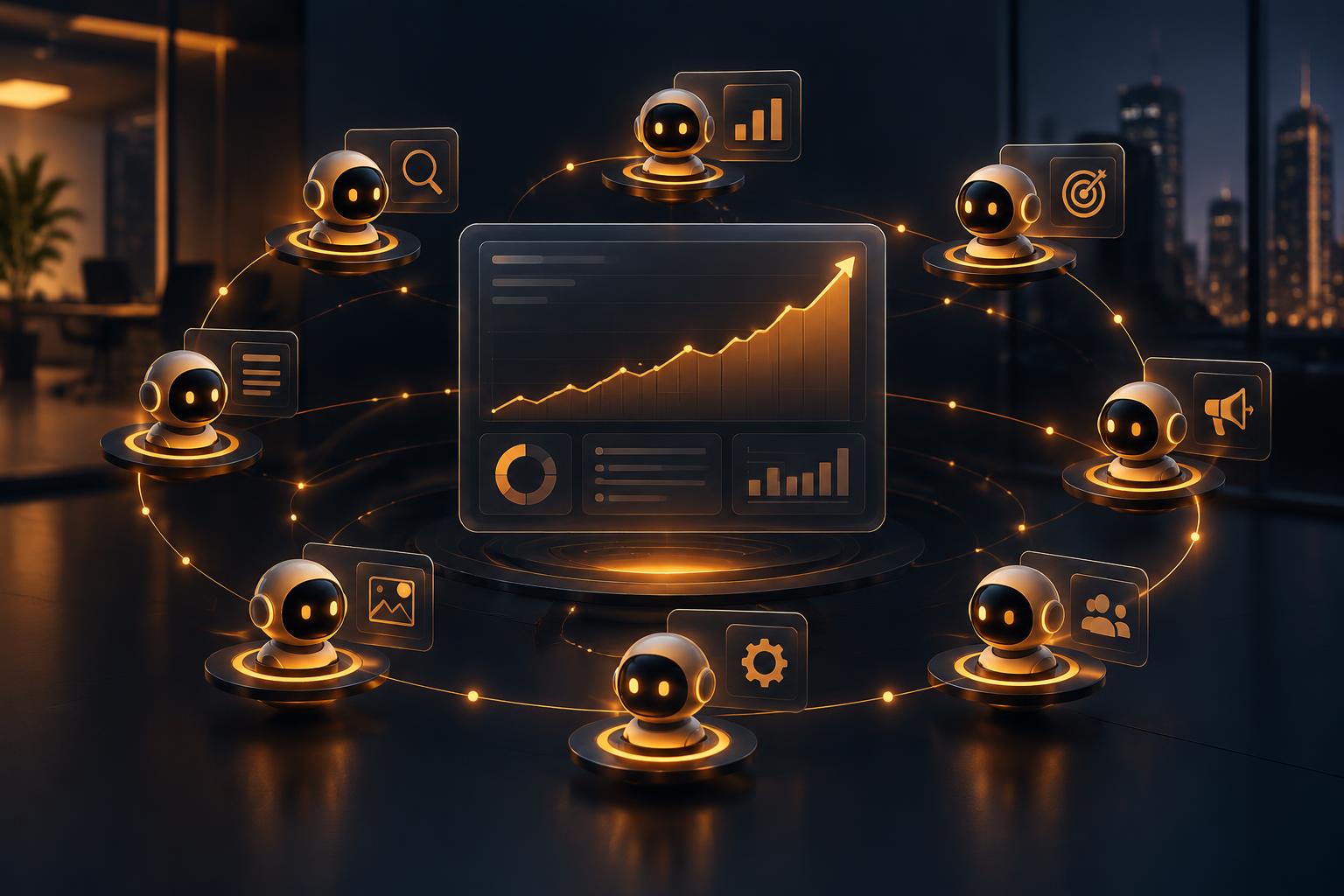
An AI-native ad agency is one where AI agents watch every client account 24/7, propose changes with an expected dollar upside, and execute them once a human approves. People stop doing the manual work and move on top of it. That is very different from an agency where everyone simply uses ChatGPT or Claude.
I'm Anna Stepura, CEO and co-founder of Adlyse, the agentic operating system for paid media. I've spent 10+ years in paid media as a CMO and on the agency side. In 2026 I talked to agencies of every size across the US and Europe. Same market, same platforms, very different margins. This is Part 1 of 2: what AI-native means and why it matters for margins in 2027.
Why are ad agency margins under pressure?
The average digital agency earned a 13% net margin in 2025, below its long-run average of about 15%. The gap between average and top agencies is wide:
| Agency segment | Net profit margin | Source |
|---|---|---|
| Average digital agency, 2025 | 13% | Promethean Research, via Agiled |
| 7-figure agencies | 18% to 22% | Predictable Profits 2025 |
| 8-figure agencies | 25% to 32% | Predictable Profits 2025 |
| Specialized agencies | About 30% | Promethean Research, via Agiled |
From what I see, agencies are squeezed from three sides:
- More platforms. Bigger brands run on Google, Meta, TikTok, Microsoft and now AI channels like ChatGPT ads. To be their main partner, you need all of them.
- More complexity, same fees. Whether you charge a percentage of spend or a flat fee, more channels rarely means more money.
- Higher expectations. Clients expect more "because now you have AI." Yet nobody tells me AI made their work easier.
The result is the 90/10 problem: media buyers spend about 90% of their time on small tasks like budget changes, checks and reports, and about 10% on strategy. That matches broader research. Asana found knowledge workers spend 58% of their day on "work about work" and less than 10% on strategy, while juggling about 9 apps a day.
What is the difference between AI-powered and AI-native?
AI-powered means your people use AI tools. AI-native means AI agents run most of the work and your people direct them. I see four levels:
- Level 0: No AI. Everything by hand.
- Level 1: AI as a chat. You ask ChatGPT, Claude, Gemini or a platform assistant, then make and execute every decision yourself.
- Level 2: AI in some steps. Skills, scripts and AI tools here and there, with you connecting them.
- Level 3: AI-native. Agents watch every account, suggest actions with a dollar upside, and execute after approval. Agents, people and simple rules share one context.
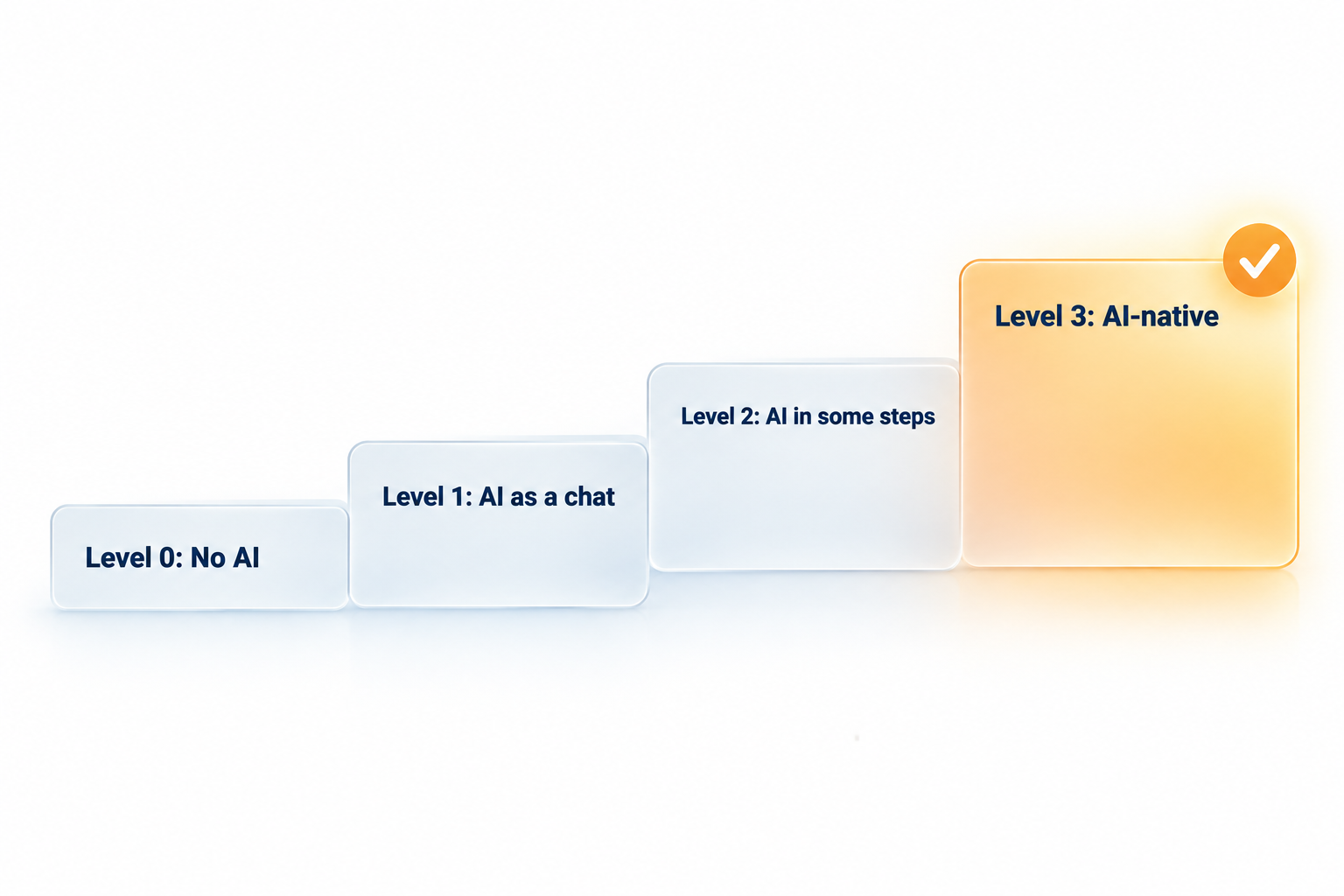
Most agencies get stuck at level 2. AI is in every tool, so the human becomes the glue between them. I've met paid media leaders who ask Claude a question, paste the answer into ChatGPT, and ask if Claude was right. Multiply that by every client and platform, and you are busier, not faster.
The data backs this up. In McKinsey's State of AI 2025, 88% of organizations use AI regularly, but only about one-third are scaling it across the organization. Just 23% are scaling AI agents anywhere. The roughly 6% of "high performers" are nearly three times as likely to have fundamentally redesigned their workflows.
One large advertiser told me they gave Claude to every team member. Each person built their own agents, the agents never talked to each other, and the team ended up less aligned than before. Personal assistants don't make an organization AI-native. Redesigned workflows do.
How does becoming AI-native grow agency margins?
There are only three ways to grow margin, and an AI-native setup helps with all three:
- Charge more. Better results and a real AI-native operation let you position as a premium agency and price like one.
- Do more with the same team. If your team handles 10 or 100 clients today, aim for twice that with the same people. Revenue per employee goes up, costs stay flat.
- Spend less to deliver the same. Fewer hours on account checks, reports and manual changes, with the same or better results.
AI use alone isn't the edge anymore: 89% of agencies already use AI for efficiency. The edge is how deeply it's built into the way you work.
Two examples from Adlyse customers. A multi-location franchise agency managing 100+ locations planned to keep hiring, even overseas, and fight the management overhead that comes with it. After moving to agentic workflows, they could grow clients without growing overhead. An agency managing $30M+ in ad spend set up 19 workflows they used to run by hand. After one week they worked like a different organization, and came back with 20 more ideas.
Next: Part 2, How AI-Native Ad Agencies Work: Workflows, Guardrails and Creative.